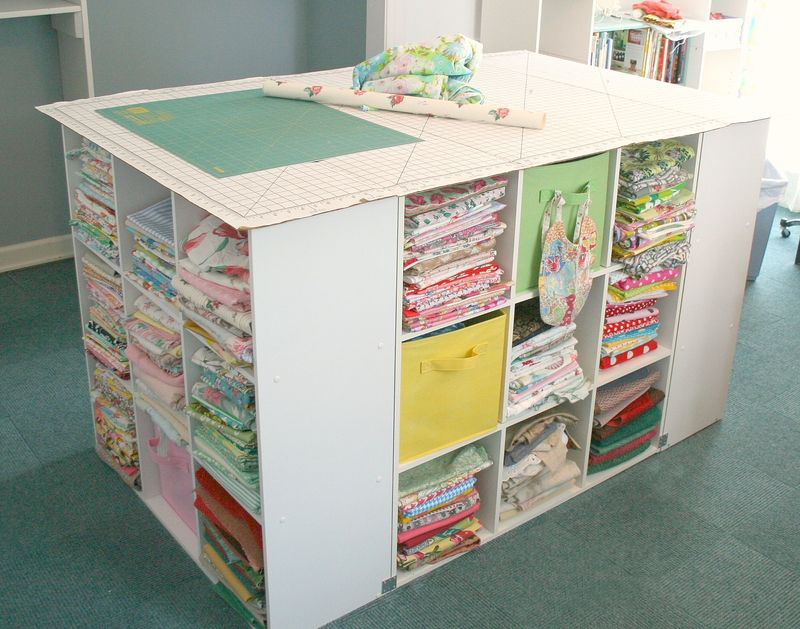
1. Multi-Functional Small Space Solutions
Maximize every inch of your sewing area with clever dual-purpose storage. This approach combines wall-mounted pegboards for tools, under-table shelving for machines, and vertical fabric storage that keeps materials visible yet compact. Clear bins protect fabric from dust while allowing quick identification of contents. Rolling carts provide mobile storage that moves to your cutting table when needed, then tucks away when guests arrive.
The beauty of small-space solutions is their adaptability. As your fabric collection grows or your space changes, these modular systems can be rearranged. A well-organized small sewing room proves that creativity isn’t about square footage—it’s about smart systems. The key is keeping frequently used fabrics at eye level and storing seasonal or special occasion materials in labeled bins above or below. This approach creates an inspiring workspace that encourages daily creativity regardless of room size.
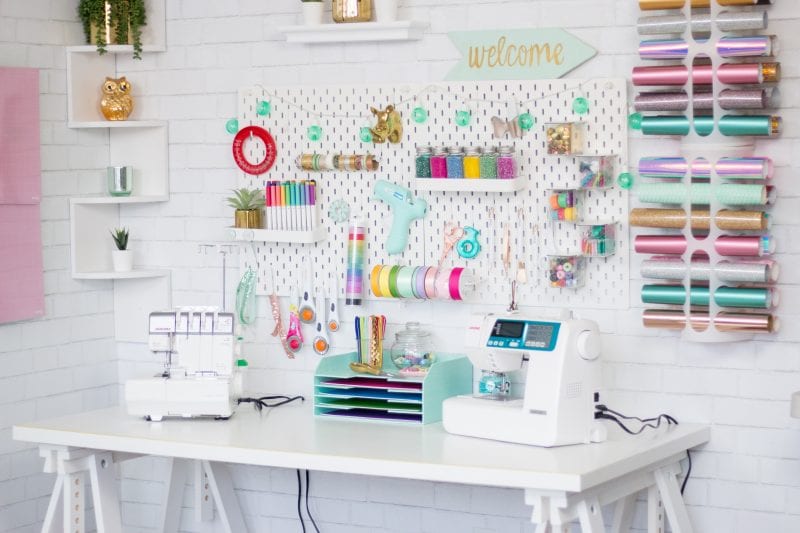
2. Cube Shelving Rainbow Display
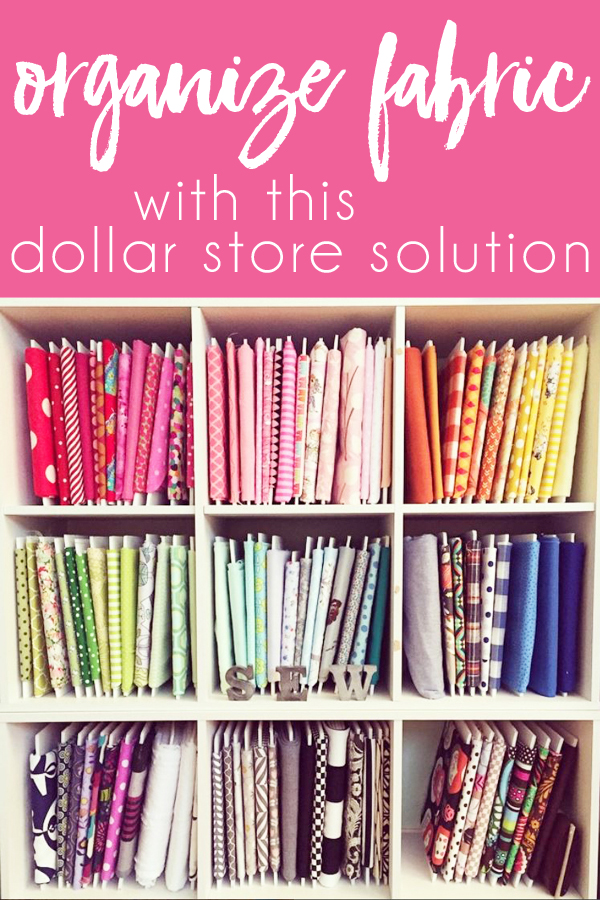
Transform basic cube shelving into a stunning fabric library by organizing folded fabrics by color. This system turns your stash into wall art while keeping every piece visible and accessible. Standard 12×12 inch cubes perfectly accommodate folded fabric quarters and half-yards, while larger cubes handle bulky fleece and home decor fabrics. The rainbow arrangement isn’t just beautiful—it makes finding specific colors intuitive.
The practical benefits extend beyond aesthetics. When fabric is displayed openly, you’re more likely to use what you have rather than buying duplicates. The uniform folding technique required for cube storage keeps stacks neat and prevents the “avalanche” effect of traditional stacking. Add woven baskets to some cubes for storing scraps, patterns, or works-in-progress. This system grows with your collection—simply add more cube units as needed.
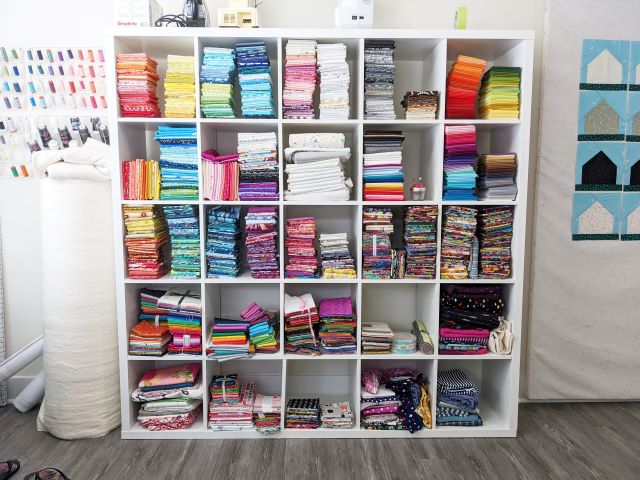
3. Vertical Bolt-Style Shelving
Store fabric the way fabric stores do—on vertical shelving that allows you to flip through options like books. This system uses deep shelves with dividers to keep fabrics upright and organized by type or color. The vertical orientation prevents creasing and allows you to see every option at a glance without unstacking piles. It’s particularly effective for larger yardages and quilting cottons.
The top of the unit becomes additional storage space for baskets of notions, thread racks, or decorative sewing items. The visual impact is impressive—a wall of organized color that inspires creativity every time you enter the room. This method requires more floor space than some alternatives, but the accessibility and fabric preservation benefits make it worth the investment for serious sewists.
Credit: Home and Away with Lisa
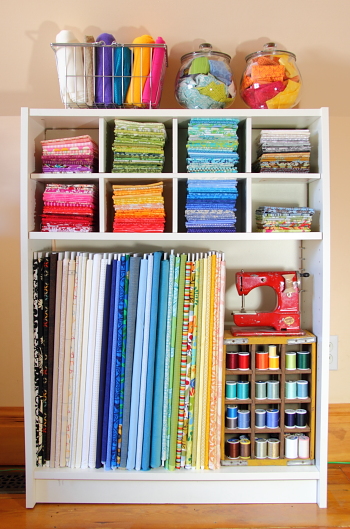
4. Decorative Fabric Bins
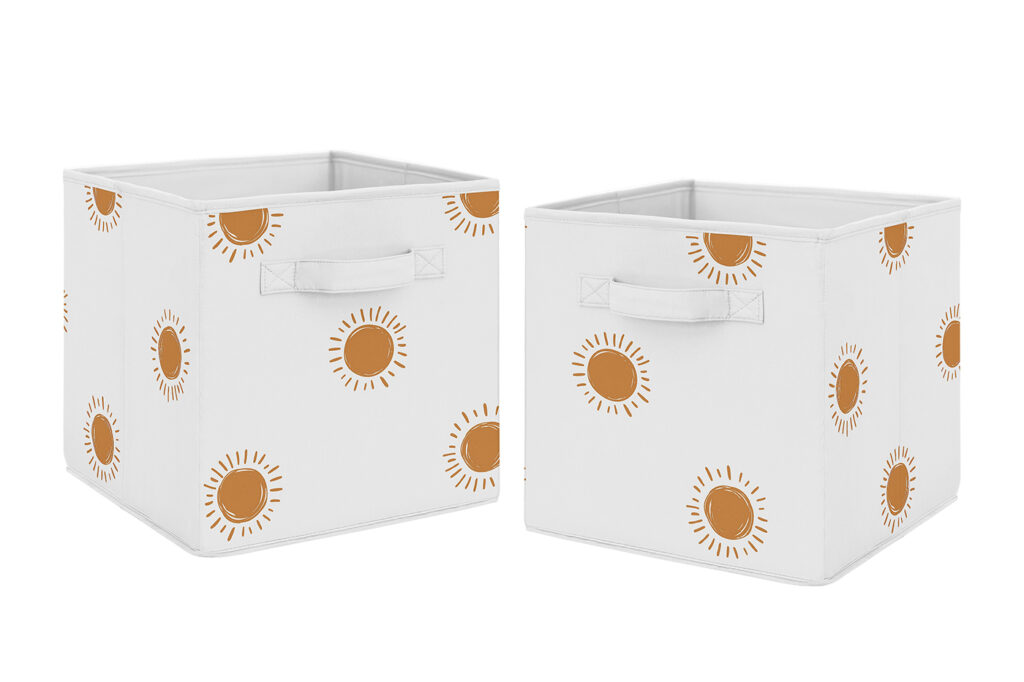
Corral fabric collections in stylish foldable bins that complement your decor. These fabric-covered cardboard or canvas containers slide easily onto shelves, into cubbies, or under tables, concealing clutter while adding pattern and texture to your space. Choose bins with handles for easy transport from storage to sewing machine, and select colors that coordinate with your room’s palette.
The flexibility of bin storage allows you to categorize by project, fabric type, or color without committing to permanent shelving. When not in use, bins fold flat for space-saving storage. They’re ideal for shared spaces where sewing supplies need to be concealed when not in use. Label each bin with contents to maintain organization long-term.
5. Island Storage Integration
Incorporate fabric storage into your cutting table or island for ultimate efficiency. This design features cube shelving built into the sides of a central work surface, keeping fabrics within arm’s reach while you sew. The countertop provides space for cutting and pressing, while the shelving below organizes works-in-progress, precuts, and yardage.
This integrated approach streamlines your workflow—no more walking across the room to retrieve materials. The open shelving encourages you to finish projects before starting new ones, as your stash is constantly visible. Add a rotating tray or small bins on the countertop for immediate project needs. This solution works beautifully in dedicated sewing rooms where the island becomes the room’s focal point.
Credit: National Quilters Circle
6. Drawer Divider System
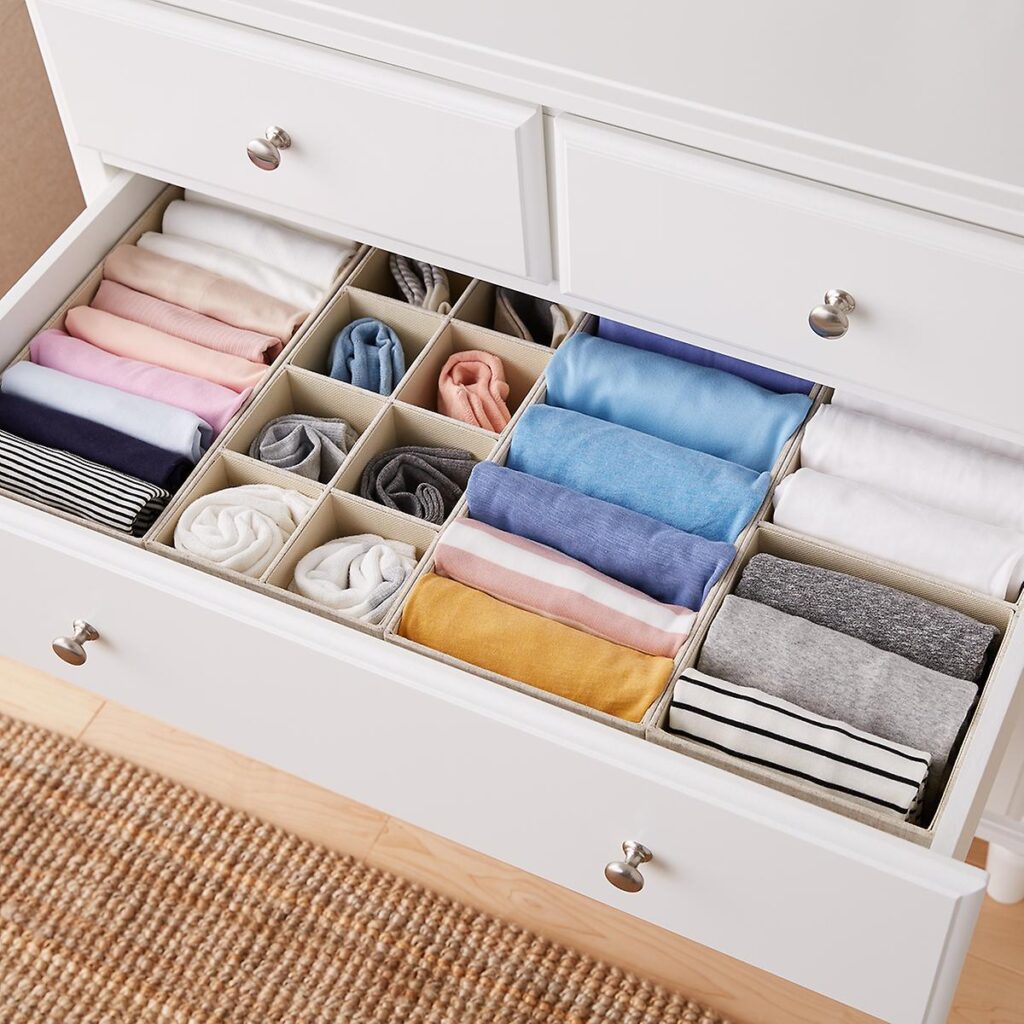
Transform deep drawers into organized fabric filing systems with adjustable dividers. This method protects fabric from light and dust while keeping it easily accessible. Fabrics fold to uniform sizes and stand upright in divided sections, allowing you to flip through options like files in a cabinet. The drawer front conceals the contents for a clean room aesthetic.
This system excels for expensive or delicate fabrics that need protection from sun and pet hair. Dividers can be repositioned as collection sizes change, accommodating everything from narrow ribbon to wide backing fabrics. Add sachets of lavender or cedar blocks to drawers to deter pests and keep fabrics smelling fresh. The investment in drawer organization pays off in preserved fabric quality and streamlined project starts.
7. Mini Bolt Board Storage
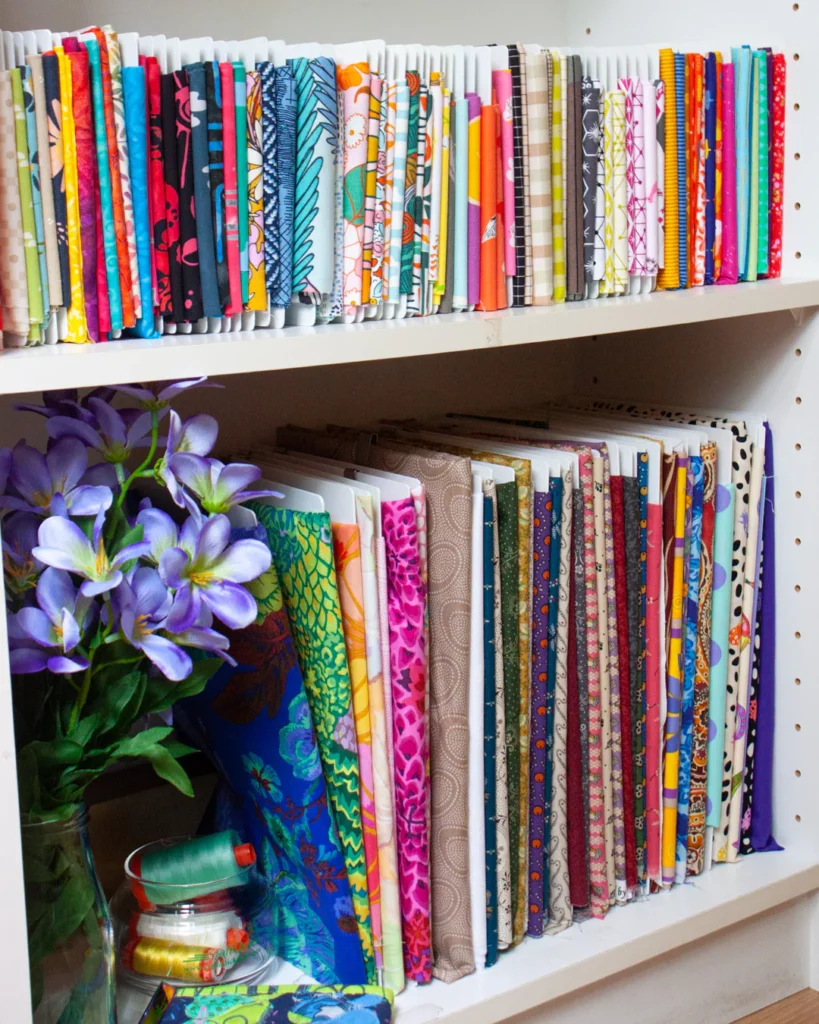
Wind fabric onto mini bolt boards—acid-free cardboard or plastic sheets designed specifically for fabric storage. These boards keep fabrics neatly wrapped and labeled, preventing the creases and wrinkles that come from folding. Stored upright in bins or on shelves, mini bolts create uniform, library-like organization that’s both practical and visually satisfying.
The boards protect fabric edges from fraying and make it easy to see exact yardage at a glance. They’re particularly effective for quilting cottons and other fabrics that tend to wrinkle. The uniform size creates clean lines on shelves, and labels on the board ends make finding specific prints effortless. This method requires initial investment in boards and time to wind fabric, but the long-term preservation benefits are significant.
8. Closet Fabric Library
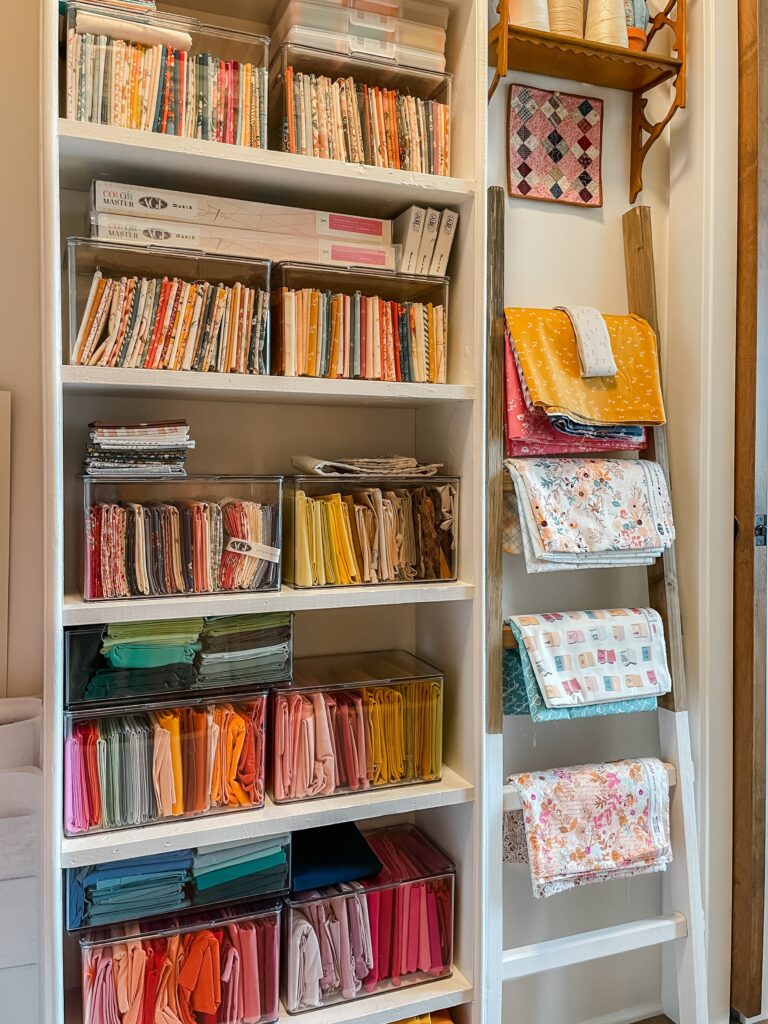
Convert a closet into a dedicated fabric library with floor-to-ceiling shelving, hanging rods for works-in-progress, and bins for scraps. This approach maximizes vertical space while keeping fabric protected from light and dust when the door is closed. The closet becomes a room within a room—a sanctuary for your creative materials.
Install adjustable shelving to accommodate varying fabric heights, and add motion-sensor lighting so no fabric hides in shadows. The floor space can hold rolling carts or cutting mats, making the closet a functional workspace, not just storage. This solution is ideal for spare bedrooms or multi-purpose rooms where sewing supplies need to be concealed when guests visit.
Credit: Sharon Holland Designs
9. Budget-Friendly Cube System
Create impressive fabric storage without breaking the bank using inexpensive cube organizers from discount stores. These units offer the same functionality as expensive custom shelving at a fraction of the cost. The key is consistent folding—fabrics wrapped around comic book boards or simple cardboard create uniform “bolts” that stand neatly in cube compartments.
This approach democratizes fabric storage, proving that organization isn’t about expensive systems but about consistent habits. Paint or wallpaper the back of cube units for custom style, and add decorative bins to some cubes for versatility. As your budget allows, upgrade to higher-quality shelving, but this starter system serves many sewists perfectly for years.
10. Hanging Fabric Display
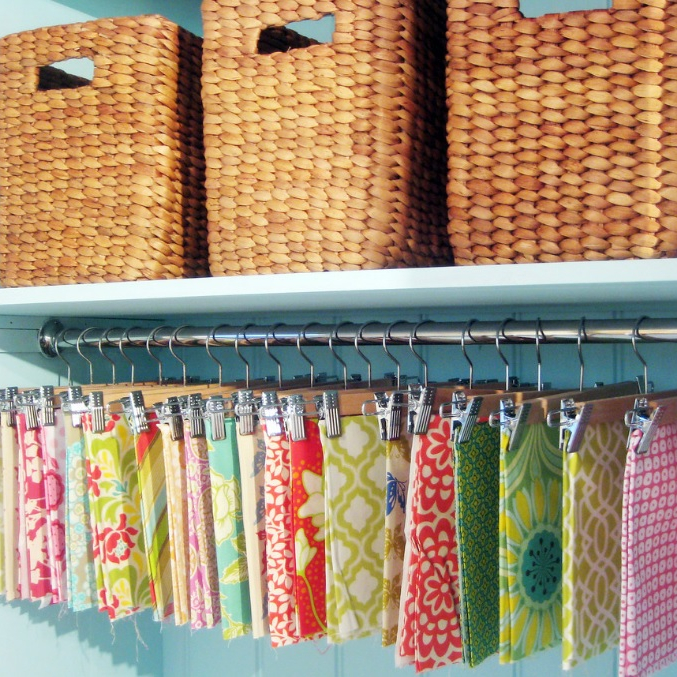
Utilize wall space with hanging fabric storage that turns your stash into art. This system uses curtain rods, café rods, or specialized hanging clips to display fabric lengths vertically. The approach is particularly effective for showcasing favorite prints, organizing works-in-progress, or storing frequently used solids within easy reach.
Hanging storage prevents creasing and allows you to see full pattern repeats without unfolding. It’s easily adaptable—add more rods as your collection grows, or rearrange fabrics by season or project. The visual impact is stunning: a curtain of color and pattern that inspires creativity. Combine with upper shelving for bins of notions and supplies to create a complete wall system.
Fabric Storage Tips:
- Protect from light: UV rays fade fabric; use closed storage or rotate displayed pieces
- Control humidity: Avoid damp basements; add moisture absorbers to storage bins
- Prevent pests: Cedar blocks or lavender sachets deter moths and silverfish
- Label everything: Note yardage, fiber content, and care instructions
- Fold consistently: Uniform sizes stack better and look more organized
- Store vertically: Prevents crushing and makes every piece visible