Let’s be honest—working with a tiny bathroom can feel like solving a puzzle where half the pieces are missing. But here’s the good news: some of the most stunning bathrooms I’ve ever seen have been the smallest ones. It’s all about being smart with your space and choosing the right elements that make the room feel open rather than cramped. Whether you’re dealing with a cramped powder room or a compact full bath, these ideas will help you maximize every square inch without sacrificing style.
1. Float Your Vanity
There’s something almost magical about walking into a bathroom and seeing the floor extend all the way to the wall beneath the sink. A floating vanity instantly creates the illusion of more floor space, making your bathroom feel airier than it actually is. Plus, it’s a breeze to clean underneath—no more awkward contortions trying to wipe around pedestal legs or cabinet bases. You can even tuck a small basket or scale underneath for extra functionality without cluttering the visual field.
When choosing a floating vanity for a small space, go for something with clean lines and perhaps a bit of texture to add warmth. Wood tones work beautifully to keep things from feeling too sterile, and the wall-mounted installation means you can position it at the perfect height for your family. Just make sure your plumbing can accommodate the wall-mounted configuration before you get your heart set on this look—it might require some adjustments behind the drywall.
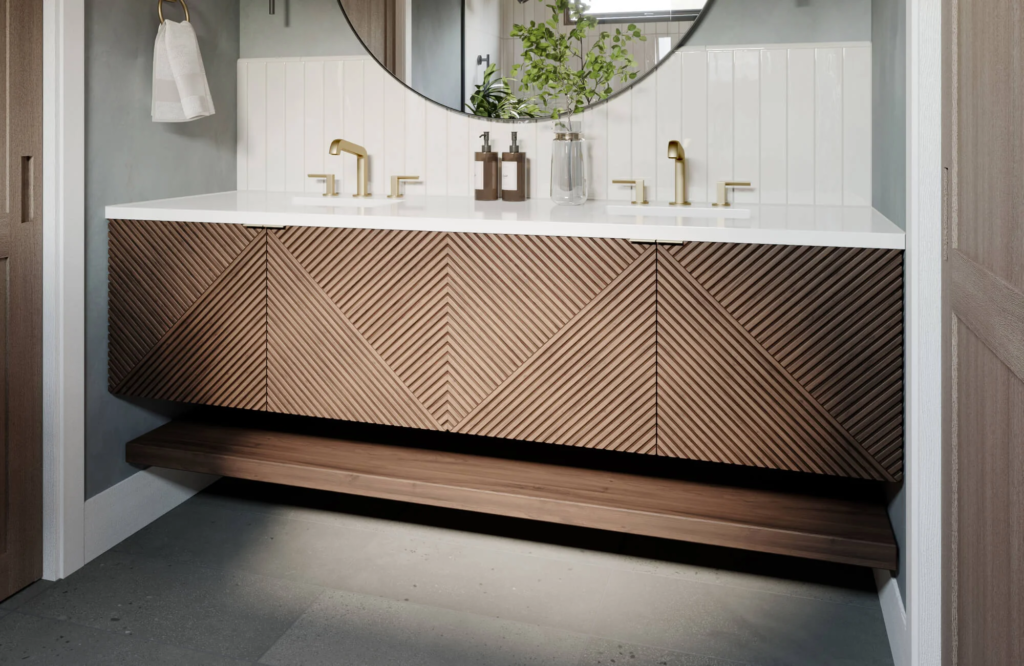
Image credit: Edward Martin via Shopify
2. Go Big with Mirrors
If there’s one trick that designers consistently use to double the visual space in a small bathroom, it’s installing an oversized mirror. I’m talking about taking that mirror almost wall-to-wall or floor-to-ceiling if possible. The reflection does wonders for bouncing light around and creating depth where there isn’t any. Suddenly, your narrow powder room feels like it has an entire other room attached to it.
Don’t feel like you have to stick with a basic rectangular mirror either. Organic, wavy shapes are having a moment right now, and they add such a nice softness to a space that can sometimes feel boxy. Frameless designs keep things sleek and modern, while thin metal frames in brass or black add just enough definition without weighing down the room. Position it opposite a window if you have one, and watch how the natural light dances throughout the space.
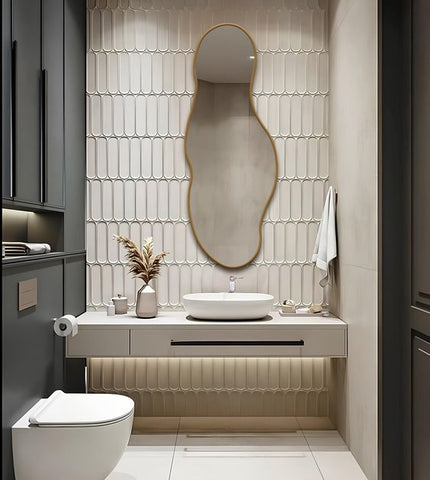
Image credit: Mirror Space
3. Keep Colors Light and Airy
Dark, moody bathrooms are definitely trending right now, but if you’re working with limited square footage, light colors are still your best friend for opening up the space. That doesn’t mean everything has to be stark white and boring, though. Think soft grays, warm creams, pale blues, or sage greens—colors that feel fresh and clean while reflecting light rather than absorbing it. A monochromatic palette where the walls, tiles, and fixtures all stay within the same color family creates a seamless look that visually expands the room.
You can add interest through texture rather than bold color. Consider subway tiles with a handmade look, beadboard paneling painted in a soft hue, or natural stone with subtle veining. These details catch the eye without overwhelming the senses. Save your bolder color moments for easily changeable elements like towels, a small rug, or a potted plant on the windowsill.
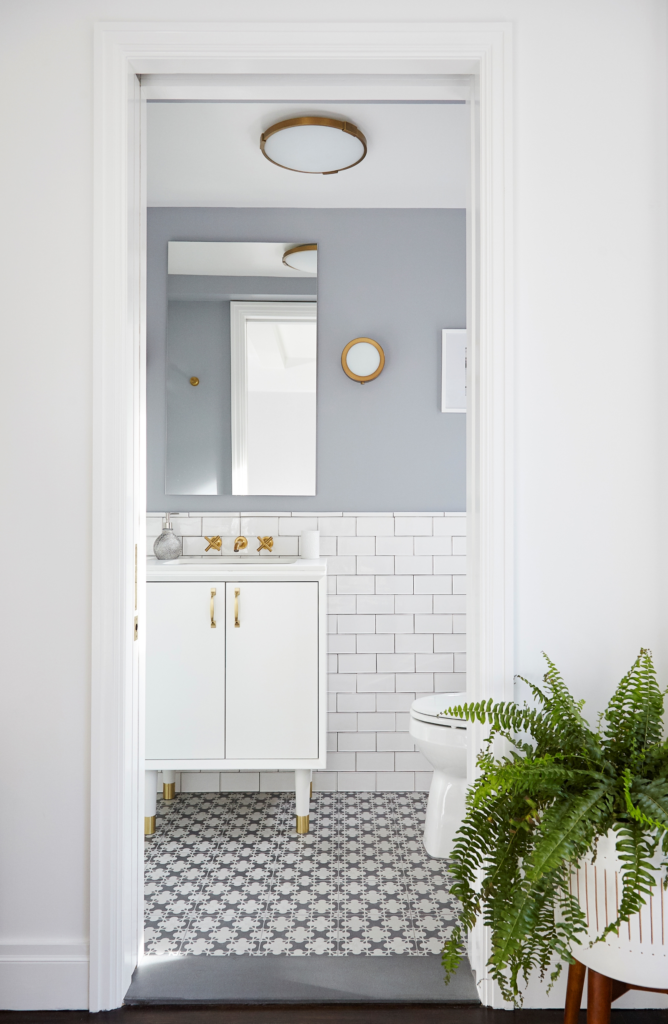
Image credit: Robern
4. Embrace Open Shelving
Closed cabinets can make a small bathroom feel heavy and closed off, whereas open shelving creates a sense of airiness and opportunity. There’s something very spa-like about seeing neatly folded white towels stacked on open shelves, interspersed with a trailing pothos or a nice candle. It turns your storage into part of the decor rather than hiding it away behind bulky cabinet doors.
The key to making open shelving work without looking messy is editing ruthlessly. Stick to a cohesive color palette for your toiletries—decant your shampoo into matching bottles if you must—and mix functional items with a few pretty objects. Floating shelves in wood tones add warmth, while sleek glass or metal options keep things feeling modern and light. Just be honest with yourself about whether you’re the type of person who will keep those shelves tidy, or if you might be better off with a mix of open and closed storage.
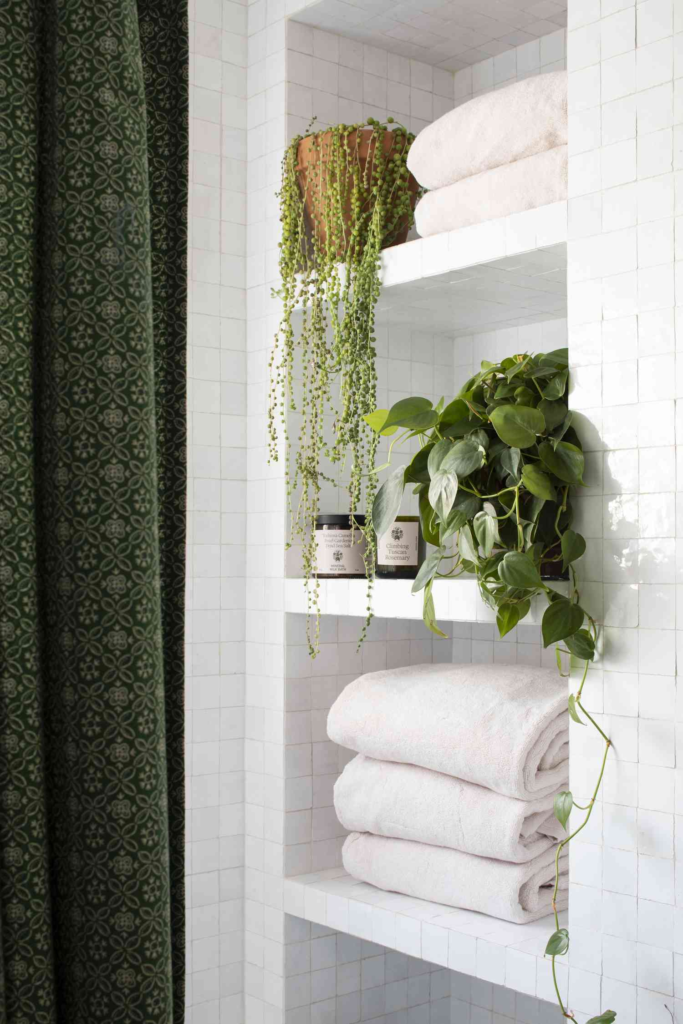
Image credit: Martha Stewart / Hub of the House
5. Tuck a Sink in the Corner
When every inch counts, that neglected corner might just become your best asset. Corner sinks are seriously underrated for small bathrooms because they utilize space that would otherwise go to waste. You free up valuable wall space for storage or simply for breathing room, and the diagonal placement naturally creates better traffic flow in a tight space.
Modern corner vanities come in surprisingly stylish options these days—you’re not stuck with the clinical-looking corner sinks of the past. Look for wall-mounted versions to keep the floor clear, or choose one with a small cabinet underneath for hidden storage. Pair it with a round mirror to soften the angles, and you’ve got a configuration that feels intentional and designer-approved rather than like a space-saving compromise.
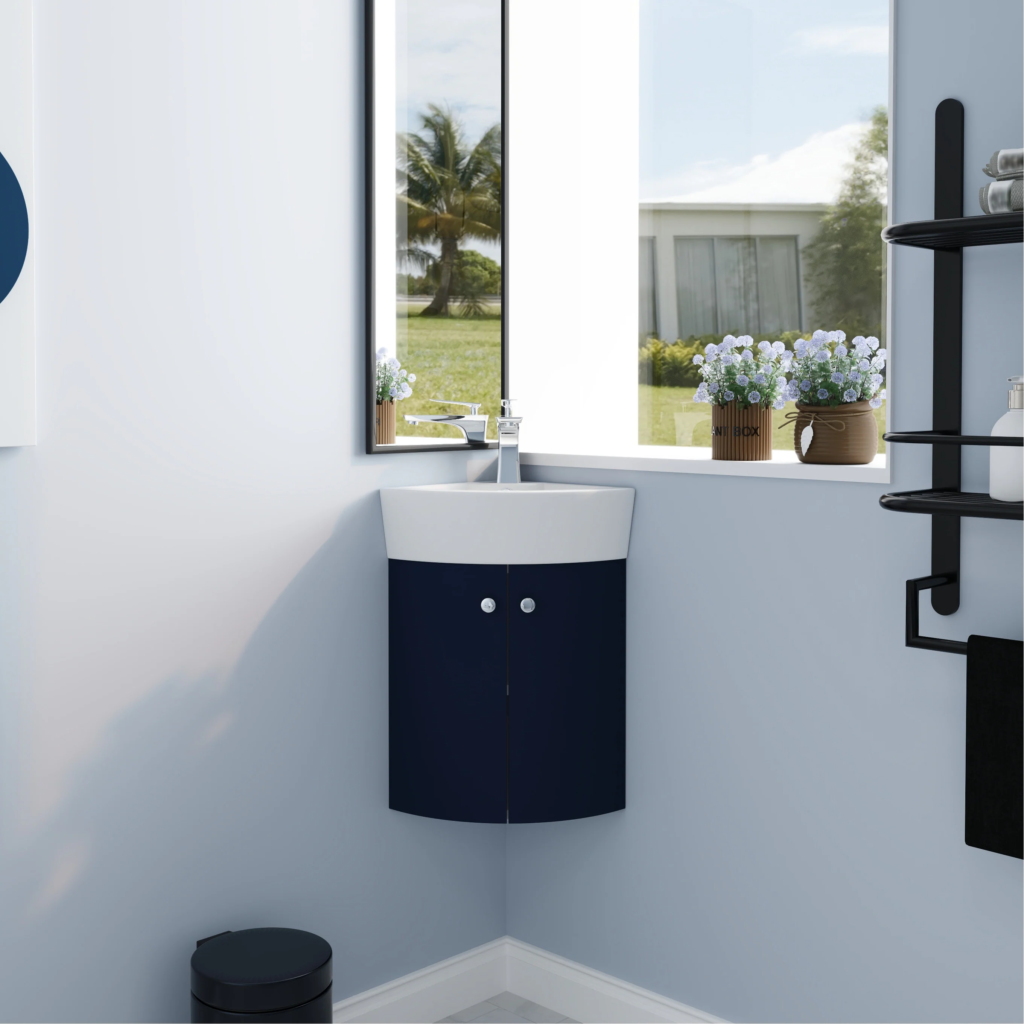
Image credit: Bed Bath & Beyond
6. Skip the Tub for a Walk-In Shower
I know, I know—everyone loves a good soak. But if your bathroom is under 50 square feet, that built-in tub is probably eating up half your real estate. Converting to a walk-in shower can reclaim so much usable space while giving your bathroom a luxurious, hotel-like feel. Frameless glass panels keep the sight lines open, so the room doesn’t feel chopped up by shower curtains or framed enclosures.
To make your walk-in shower feel spa-worthy rather than utilitarian, invest in nice tile and consider adding a built-in bench or niche for toiletries. A rainfall showerhead mounted from the ceiling draws the eye upward and adds a touch of everyday luxury. If you’re worried about resale, most buyers actually prefer a nice walk-in shower these days, especially in guest bathrooms or powder rooms where a tub rarely gets used anyway.
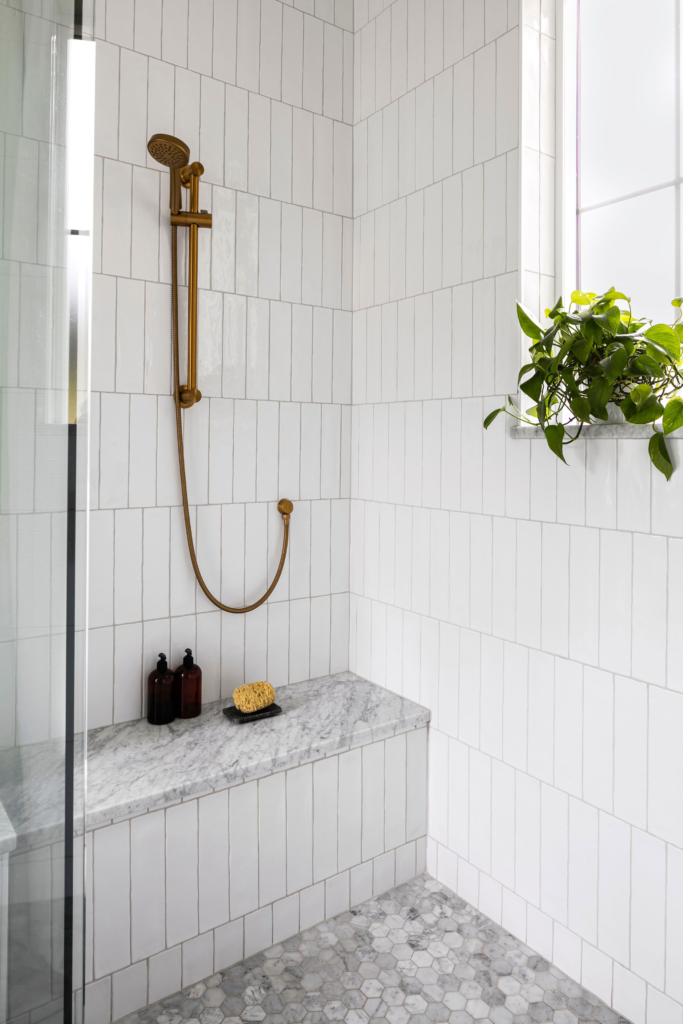
Image credit: Better Homes & Gardens
7. Mount Your Toilet on the Wall
Wall-mounted toilets might seem like a splurge, but they offer two huge benefits for small bathrooms. First, like floating vanities, they free up floor space and make the room feel larger and easier to clean. Second, the concealed tank sits inside the wall, saving precious inches of depth that a standard toilet would protrude into the room. In a narrow bathroom, those few inches can be the difference between comfortable clearance and constantly bumping your knees.
The installation does require opening up the wall and possibly adjusting plumbing, so this is best considered during a renovation rather than a quick weekend update. But the sleek, modern look combined with the space savings makes it worth the investment for many homeowners. Plus, you gain a little ledge space on top of the concealed tank for artwork or a small plant.
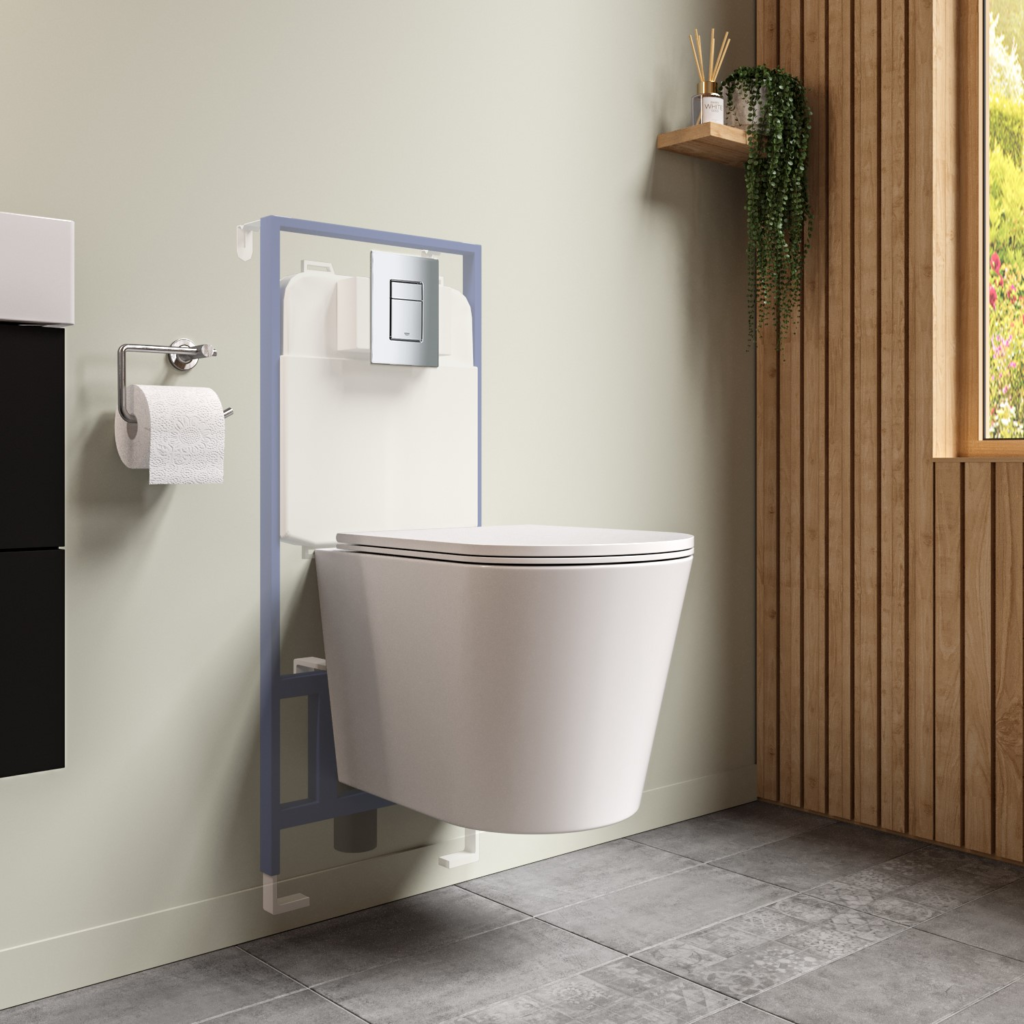
Image credit: Better Bathrooms
8. Choose Glass Over Curtains
Shower curtains might be practical, but they visually cut your bathroom in half and block precious light. Switching to a clear or frosted glass shower door instantly makes the space feel larger and more cohesive. If you have the budget for frameless glass panels, even better—they almost disappear, letting your tile work shine through and maintaining an uninterrupted sight line from one end of the room to the other.
For tiny bathrooms where a swinging door isn’t practical, consider a sliding glass door or a fixed panel with a strategically placed opening. The transparency of glass means you can show off beautiful shower tile while still containing water. And let’s be honest—glass just feels more grown-up and finished than fabric curtains that can get mildewy and stick to your legs.
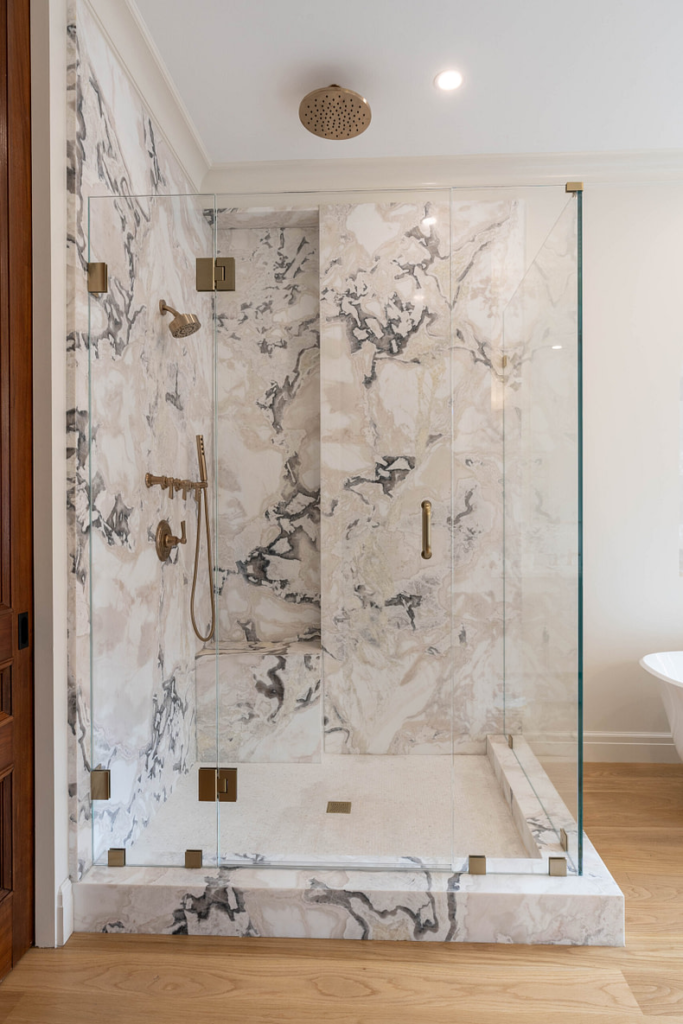
Image credit: Oasis Shower Doors
9. Think Vertical for Storage
When floor space is at a premium, the only way to go is up. Tall, narrow storage cabinets or ladder-style shelving units draw the eye upward and make use of that often-wasted vertical real estate near the ceiling. Look for slim linen towers that fit in that awkward spot between the vanity and the wall, or install floating shelves high above the toilet for items you don’t need daily.
The beauty of vertical storage is that it keeps essentials accessible without cluttering your limited counter space. Baskets on open shelving can corral smaller items and keep the look tidy, while closed cabinets hide the chaos of extra toilet paper and cleaning supplies. Just be mindful of proportion—a cabinet that’s too wide will overwhelm the room, but one that’s tall and slender actually enhances the perception of height.
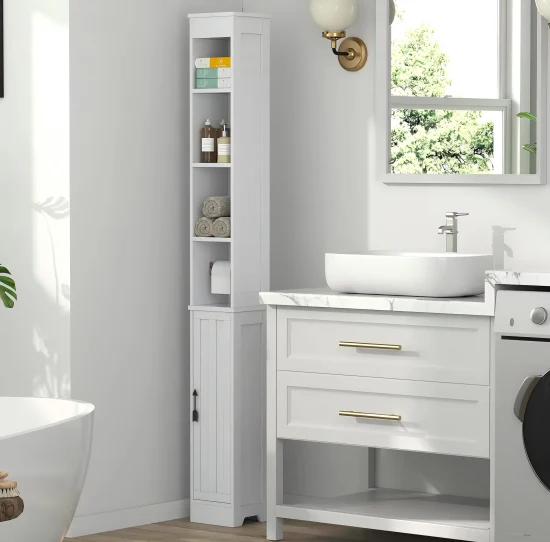
Image credit: Vecelo via Shopify
10. Recess Your Shower Storage
Those metal caddies hanging from the showerhead or suction-cupped to the wall are functional, sure, but they add visual clutter and can make a small shower feel even more cramped. Instead, carve out a recessed niche in the shower wall during your renovation. It sits flush with the tile, creating a sleek, integrated spot for your shampoo and soap that doesn’t protrude into your elbow room.
Position the niche at a comfortable height for reaching while showering, and consider adding a small ledge or dividing it into sections to keep products organized. You can use the same tile as the rest of the shower for a seamless look, or choose a contrasting accent tile to create a little design moment. Either way, you’ll appreciate not having bottles falling on your toes every time you bump the shower caddy.
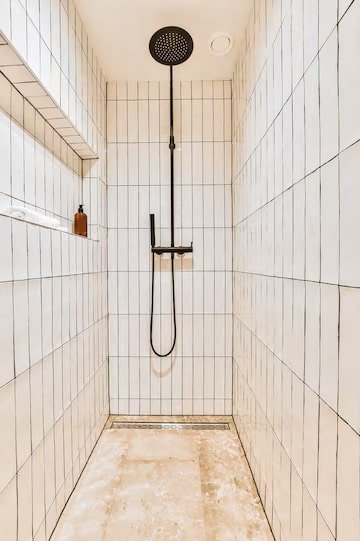
Image credit: Stone Tile Depot
11. Make a Statement with Patterned Floors
Just because your bathroom is small doesn’t mean it has to be boring. A bold patterned floor—whether it’s geometric cement tiles, classic black-and-white checkerboard, or intricate Moroccan-inspired designs—can actually make the space feel larger by drawing the eye outward and creating visual interest. The trick is keeping the walls relatively simple so the floor becomes the star without overwhelming the room.
If you’re nervous about going too bold, start with a neutral color palette in the pattern itself. Gray and white geometrics or soft blue and cream motifs add personality while maintaining a calm atmosphere. And here’s a designer secret: running the same floor tile into the shower (if you’re doing a curbless or walk-in design) creates continuity that makes the whole room feel more expansive.
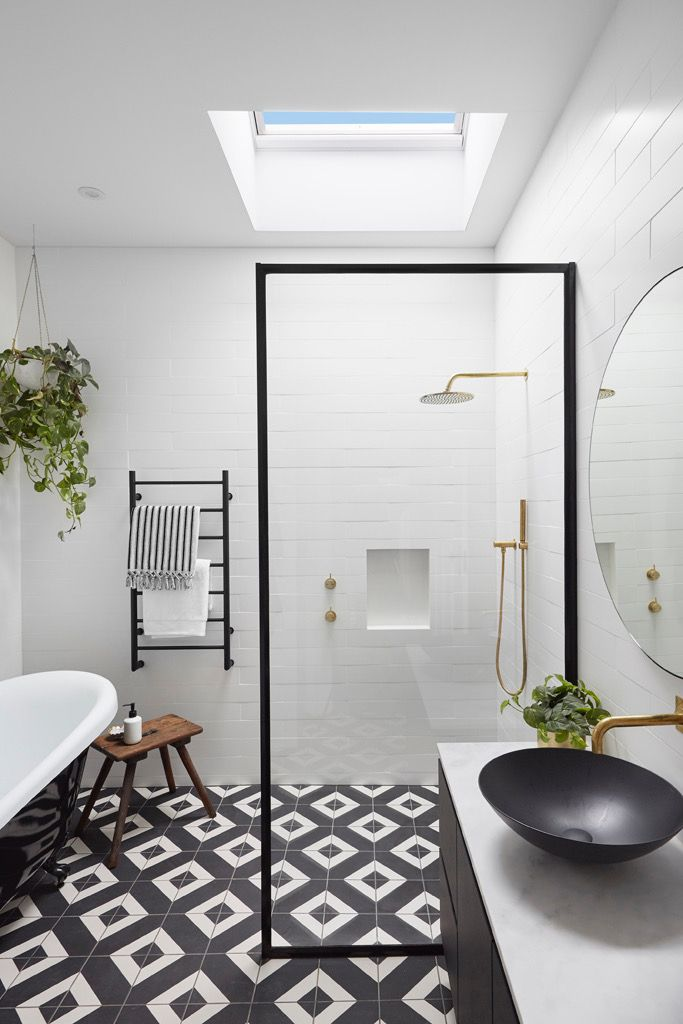
Image credit: Small Bathroom Renovations Perth
12. Invite Natural Light with a Skylight
Nothing makes a small space feel more cramped than bad lighting, and bathrooms often suffer from having small windows or none at all for privacy reasons. If you’re in a position to add a skylight, it can be an absolute game-changer. Suddenly, your bathroom is flooded with natural light that changes throughout the day, making the space feel connected to the outdoors rather than closed off.
Even a small skylight positioned over the shower or vanity can eliminate the need for harsh overhead lighting during the day. If a traditional skylight isn’t possible due to your roof structure or budget, consider a solar tube—it captures sunlight from the roof and funnels it down through a reflective tube, lighting up your bathroom with that warm, natural glow that no LED can quite replicate.
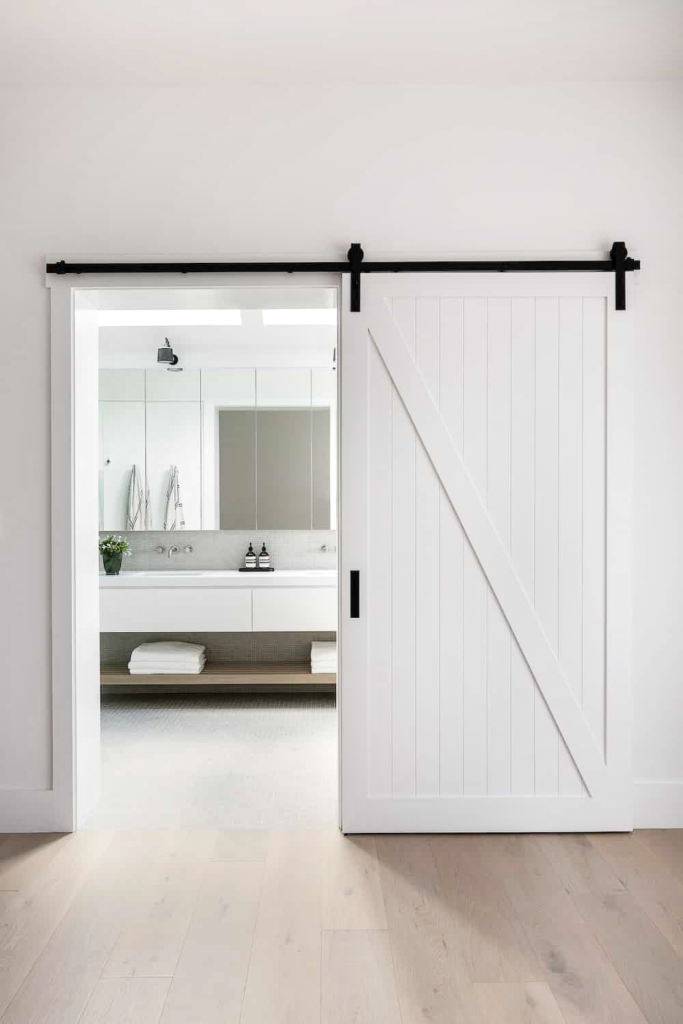
Image credit: Small Bathroom Renovations Perth
13. Swap to a Sliding Barn Door
Traditional swing doors need about three feet of clear space to open properly—that’s three feet you can’t use for anything else in a tiny bathroom. A sliding barn door glides along the wall, requiring zero clearance inside the room itself. This means you can place fixtures closer to the entrance or add that extra storage shelf you’ve been wanting without worrying about door clearance.
Modern barn doors for bathrooms come in styles ranging from rustic reclaimed wood to sleek, painted panels with minimal hardware. You can even find versions with mirrors mounted on them to double the functionality. Just be sure to install a soft-close mechanism to prevent slamming, and consider adding a privacy lock since traditional latches don’t work on sliding systems.
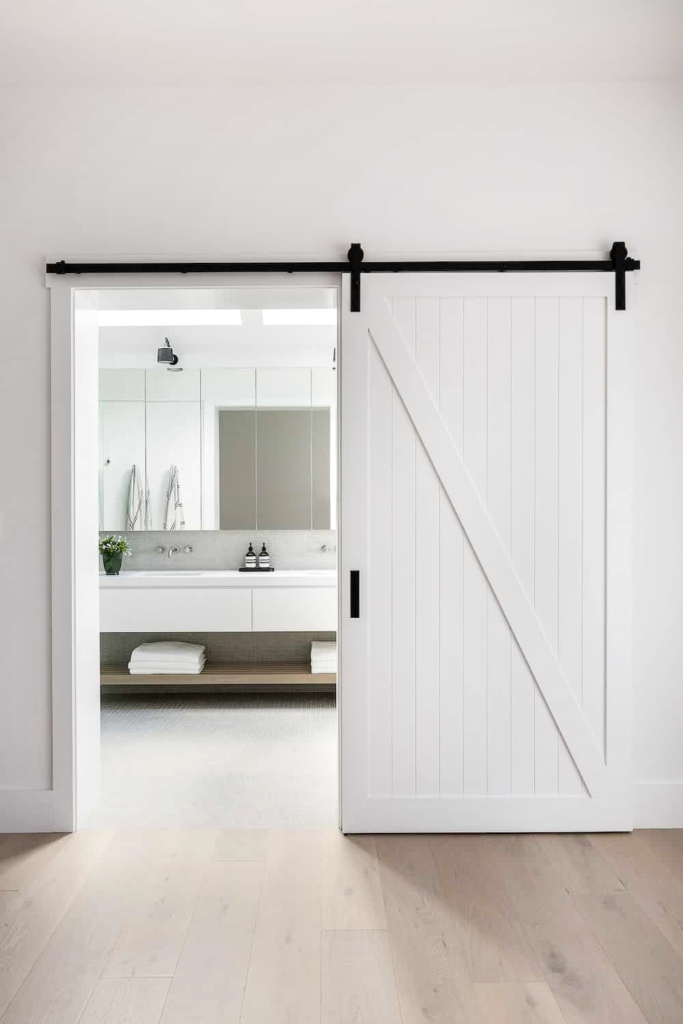
Image credit: Small Bathroom Renovations Perth
14. Choose Compact, Purpose-Built Fixtures
Not all small bathrooms need custom solutions—sometimes you just need fixtures designed specifically for tight spaces. Look for “compact” or “petite” vanities that are shallower than standard 21-inch depths, or corner toilets that tuck the tank against the wall at an angle. Many manufacturers now offer full lines specifically designed for apartment bathrooms and powder rooms where every inch matters.
When shopping, bring your tape measure and don’t assume standard sizes will fit. A vanity that’s just six inches narrower can make a huge difference in walkway clearance. The same goes for toilets—compact elongated bowls offer comfort while taking up less space than traditional round fronts. These purpose-built pieces prove that you don’t have to sacrifice comfort or style just because your bathroom is postage-stamp sized.
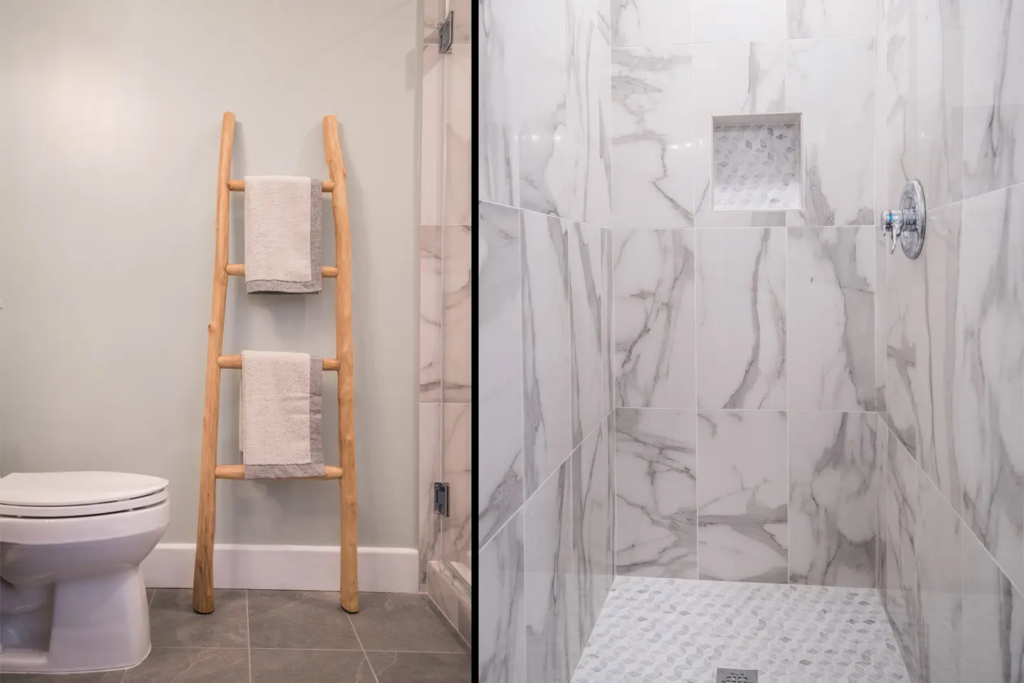
Image credit: Kanika Design
15. Stack Your Tiles Vertically
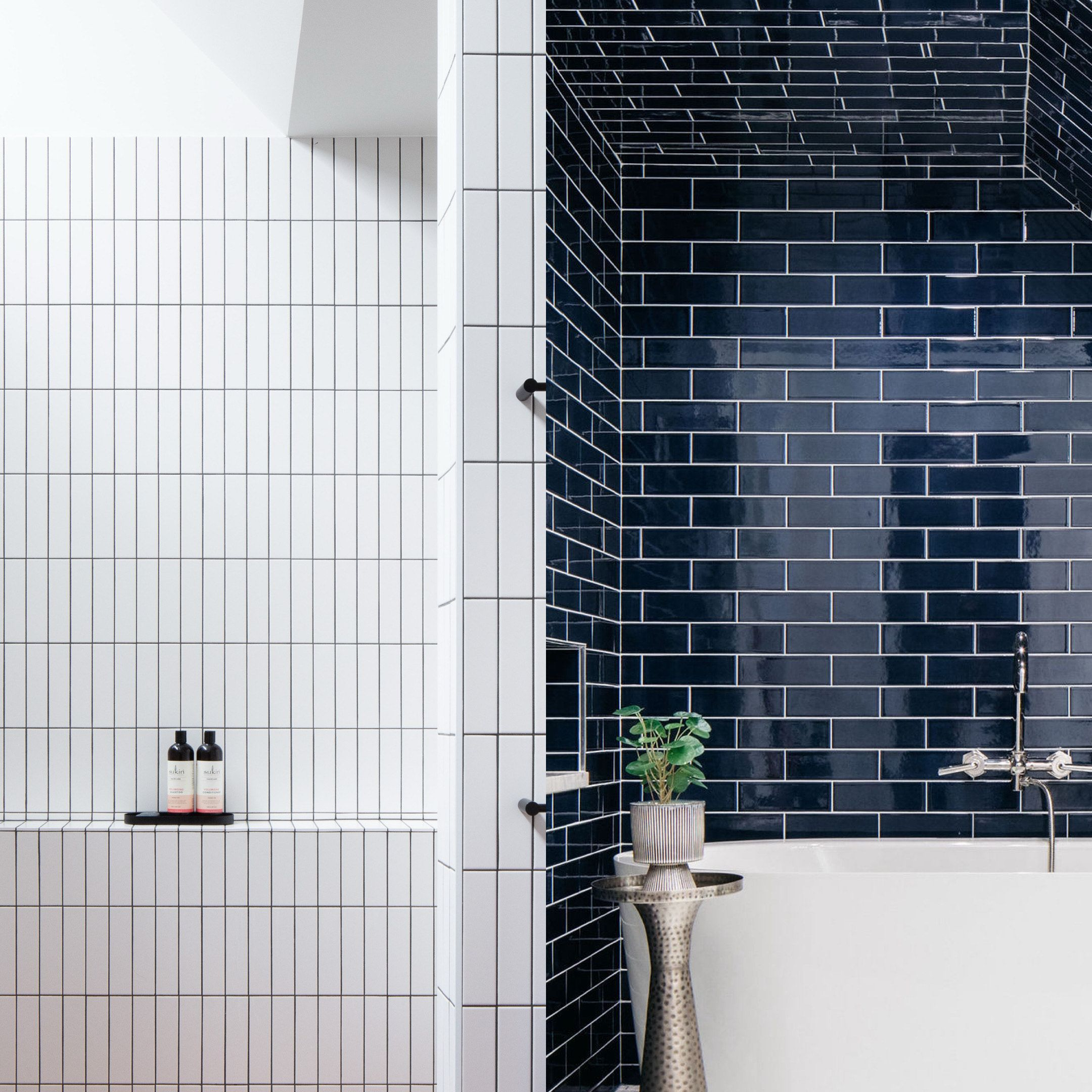
Here’s a subtle trick that can make your ceilings feel higher: install subway or rectangular tiles vertically rather than in the traditional horizontal brick pattern. The vertical lines draw the eye upward, creating the illusion of height in a room that might feel a bit squat. This works especially well in shower enclosures or as a feature wall behind the vanity.
You can amplify this effect by choosing tiles with a slight sheen that reflects light, or by using dark grout with light tiles to emphasize the vertical lines. Mixing vertical tile on the walls with horizontal tile on the floor creates a nice visual balance that keeps the room from feeling too directional. It’s a small detail that most people won’t consciously notice, but they’ll definitely feel like the room has good proportions.
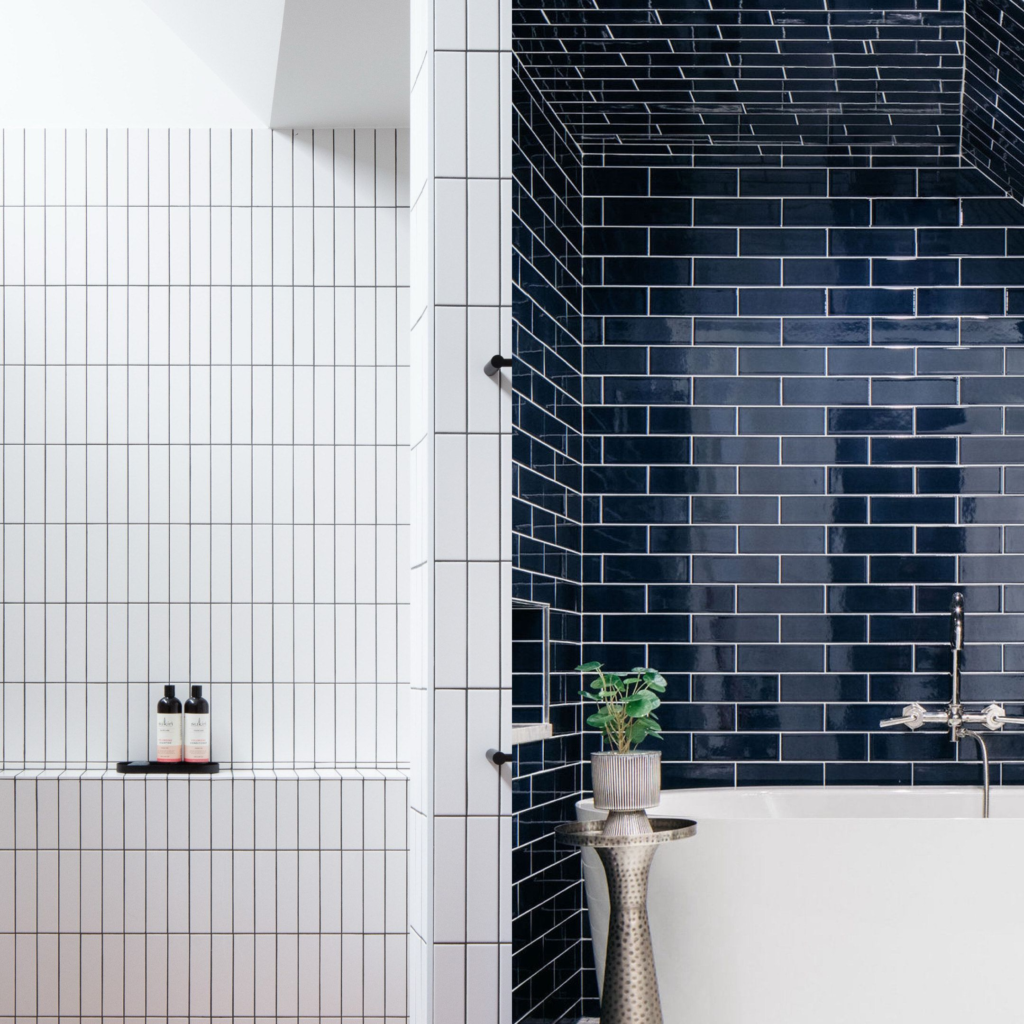
Image credit: Livingetc
Pro Tip: Before you start tearing anything out, live with your small bathroom for a while and notice where you actually need more space. Sometimes the best solution isn’t a major renovation but simply swapping out one bulky element for something more streamlined. Start with the biggest space-hog—usually the vanity or tub—and work from there. You’ve got this!