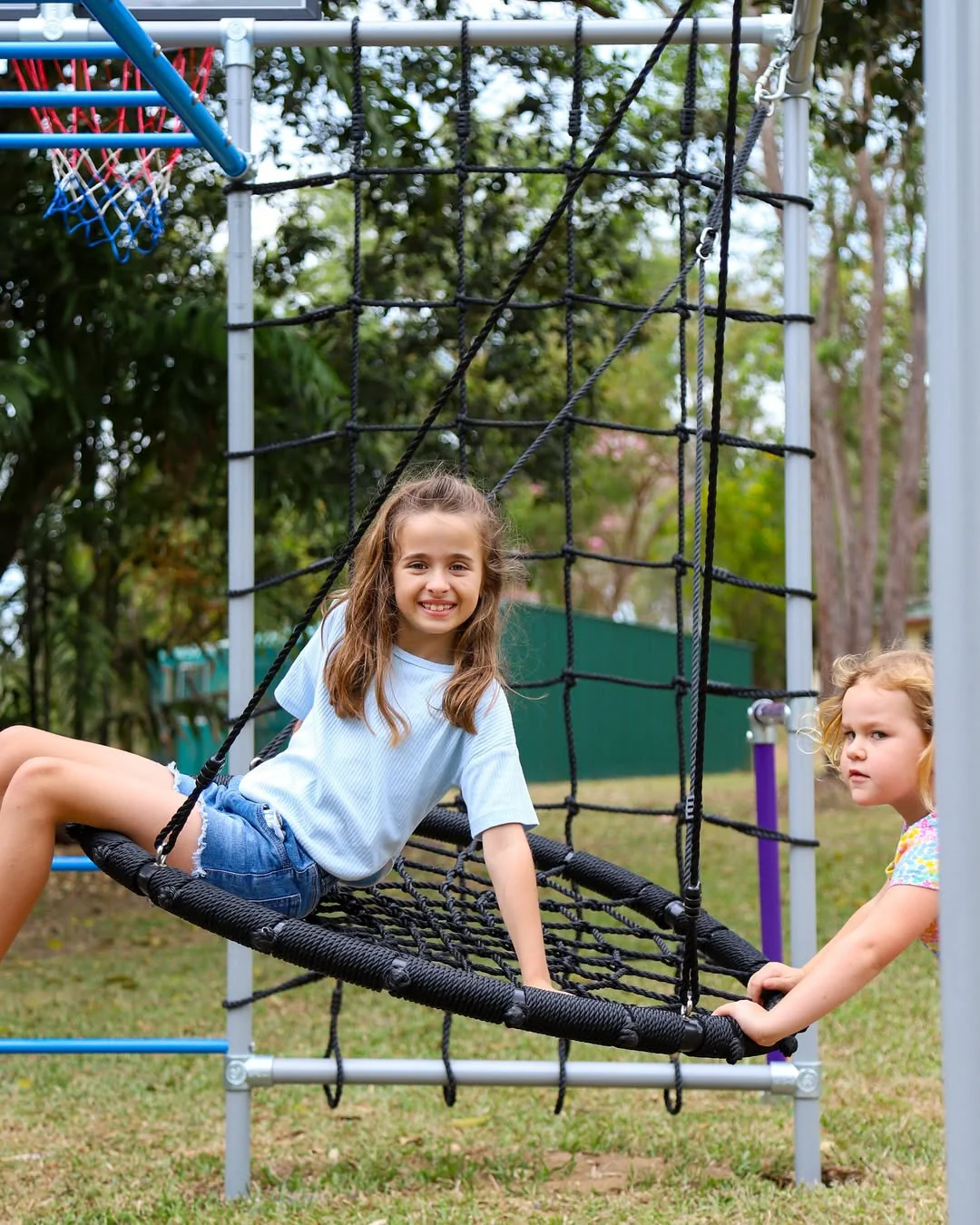
Let’s be honest for a second—how many times have you bought some shiny new outdoor toy, only to watch your kids abandon it after twenty minutes to go dig in the dirt with a stick? I’ve been there. The truth is, the best backyard play areas aren’t about buying the fanciest equipment. They’re about creating spaces where kids can run, imagine, get messy, and burn off that wild energy before bedtime. Whether you’ve got a sprawling lawn or a modest patch of grass, there’s plenty you can do to turn your backyard into the kind of place where childhood memories get made.
The ideas below range from simple weekend projects to bigger investments, but every single one is designed to get kids moving, thinking, and playing outside. No screens, no batteries required—just good old-fashioned backyard fun.
1. Build a Classic Swing Set
There’s a reason swing sets have been a backyard staple for generations: kids absolutely love them. A sturdy wooden swing set with a couple of belt swings, a trapeze bar, and maybe a glider gives siblings and friends plenty to fight over (in the best way possible). Look for cedar or pressure-treated lumber that can handle years of weather without turning into a splinter factory.
The sweet spot for placement is somewhere with a bit of shade if you can manage it, and definitely on level ground. If you’re tight on space, A-frame designs pack a lot of fun into a smaller footprint. Add a rubber mulch or pea gravel base underneath for safety, and you’ve got an instant neighborhood hangout spot that’ll get used from spring through fall.
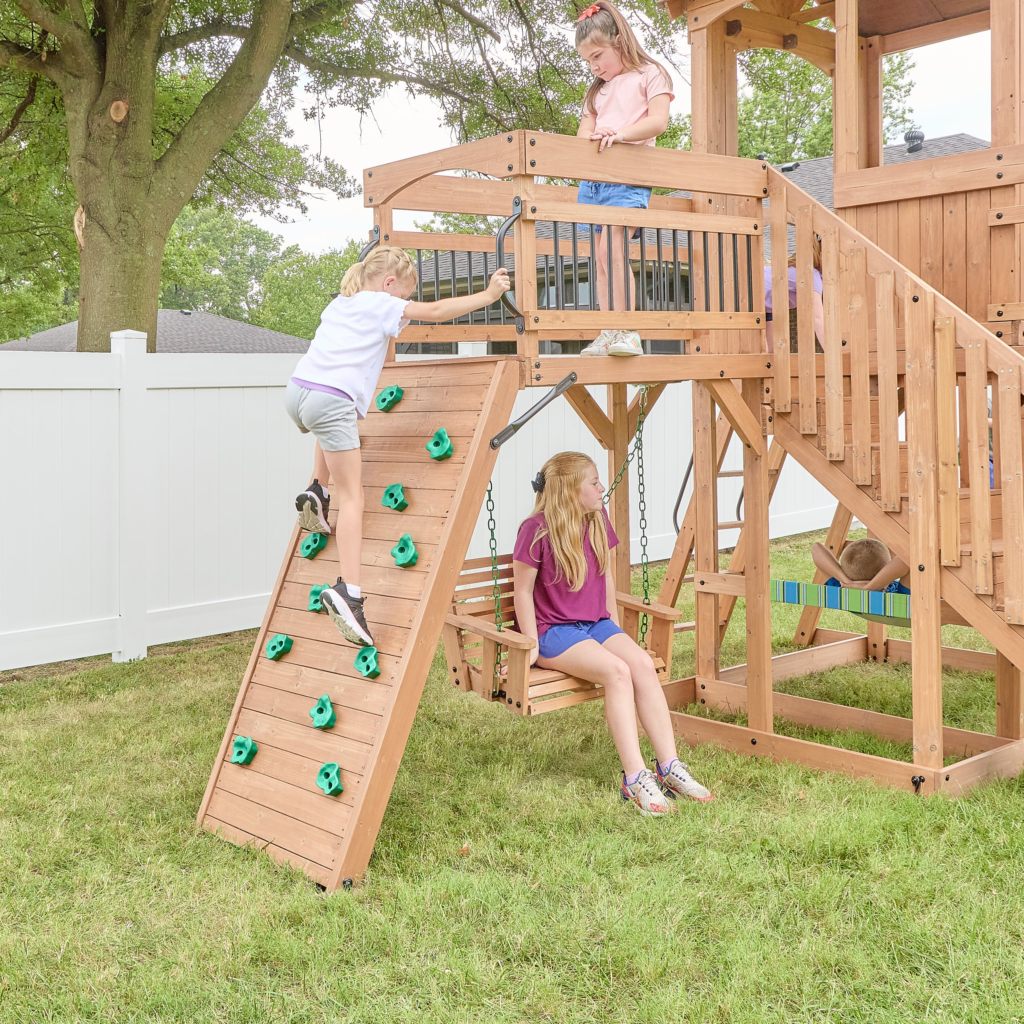
Image credit: Backyard Discovery
2. Install a Proper Sandbox
A sandbox is basically a magnet for kids under eight. There’s something universally appealing about digging, pouring, and building little kingdoms in the sand. Go for a wooden box with built-in seating or corner benches so little legs don’t get tired from kneeling. A canopy or umbrella attachment is worth every penny—it keeps the sand from turning into a skillet on hot days and gives kids a shady retreat.
Fill it with play sand rather than builder’s sand, since it’s cleaner and softer on small hands. Keep a cover handy to keep neighborhood cats from treating it like a litter box (trust me on this one), and stash a bucket of shovels, molds, and sifters nearby. Pro tip: bury a few “treasures” in the sand before the kids come out—plastic dinosaurs, shiny coins, whatever—and watch them lose their minds with excitement.
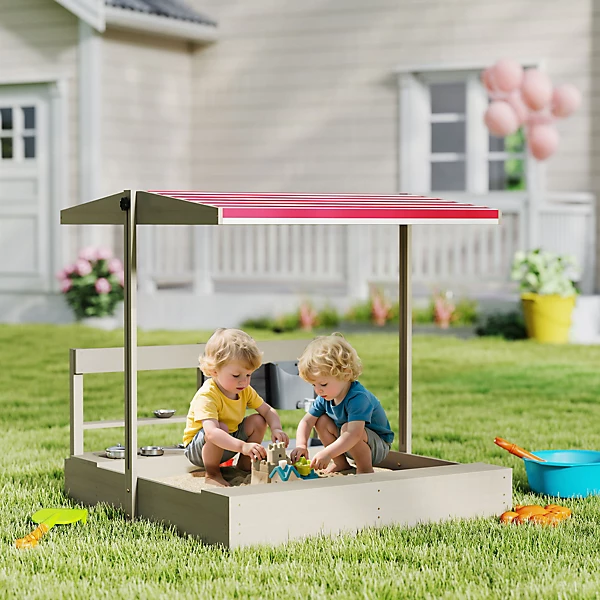
Image credit: DIY.com / Outsunny
3. Erect a Treehouse Retreat
If you’ve got a sturdy tree with good branches, a treehouse is the ultimate backyard flex. It doesn’t need to be fancy— even a simple platform with railings and a rope ladder feels like a castle when you’re six. The elevation alone makes kids feel like they’re in their own world, away from grown-up rules and supervision.
Start with a basic rectangular platform bolted securely to the trunk, then add walls, a roof, and a fun entry method like a climbing rope or wooden ladder. Let the kids help with painting and decorating the interior; a few throw pillows, a battery-powered lantern, and maybe a tin can phone create the kind of hideaway they’ll remember forever. Just be sure to check the structure each spring for any loose boards or wear.
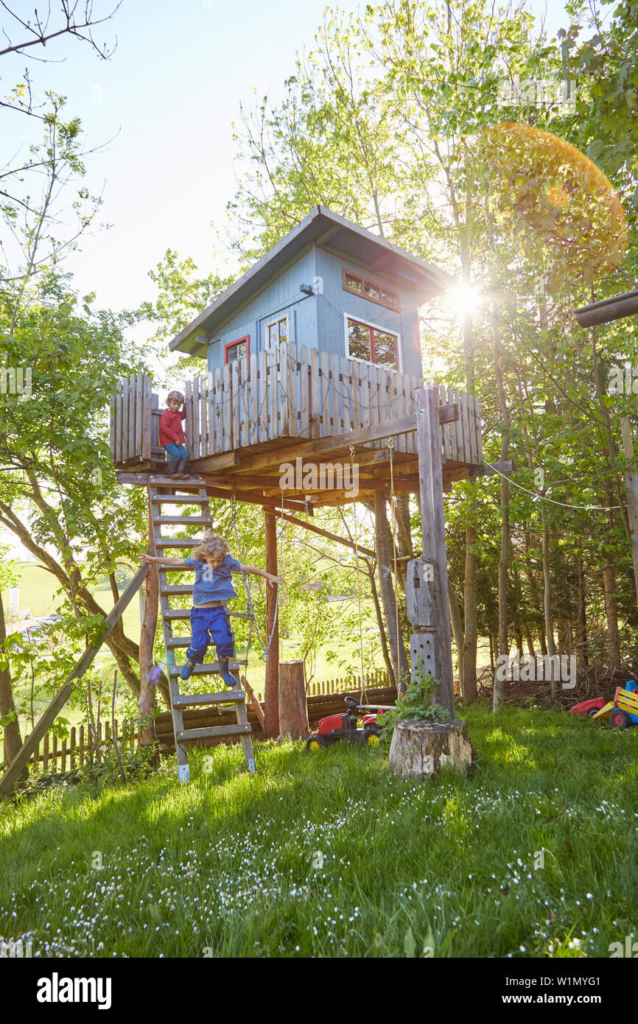
Image credit: iStock
4. Set Up a Mud Kitchen
I know, I know—mud sounds like a nightmare. But hear me out: a dedicated mud kitchen keeps the mess contained and gives kids permission to get gloriously dirty in one specific spot. It’s basically an outdoor pretend-play station with a work surface, a sink or basin, and lots of old pots, pans, and utensils. Kids “cook” with dirt, water, leaves, and whatever else nature provides.
Position it near your hose for easy water access and cleanup, and use an old wooden table or pallet as the base. Scour thrift stores for metal bowls, colanders, and wooden spoons—avoid glass for obvious reasons. A small chalkboard lets them write out their “menu,” and honestly? Watching them serve you a pinecone soufflé is worth a little extra laundry. Studies even suggest that playing in dirt can boost immune systems and reduce stress, so you’re basically doing it for their health.
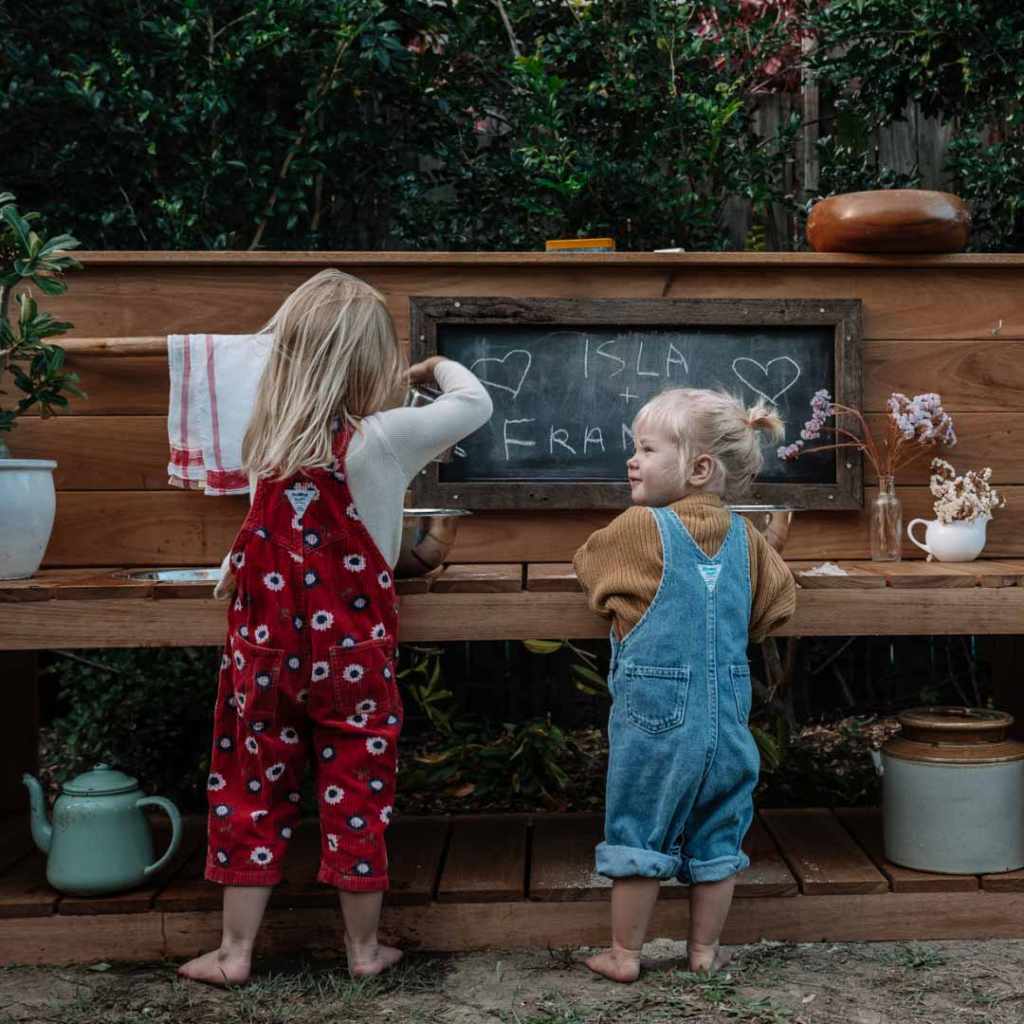
Image credit: Castle and Cubby
5. Add a Climbing Wall
Kids are natural climbers—give them a safe place to do it and they’ll scale anything you put in front of them. A vertical climbing wall attached to a play structure, fence, or freestanding frame builds strength, coordination, and confidence. You can buy panels with holds already attached, or go full DIY with plywood, T-nuts, and colorful handholds from a climbing supply store.
Start with a gentle vertical angle rather than overhanging if your kids are young or new to climbing. The holds should be large and grippy for beginners, and you’ll want a crash pad or thick rubber mulch underneath for safety. The beauty of a home wall is that you can rearrange the holds as skills improve, keeping the challenge fresh without buying new equipment.
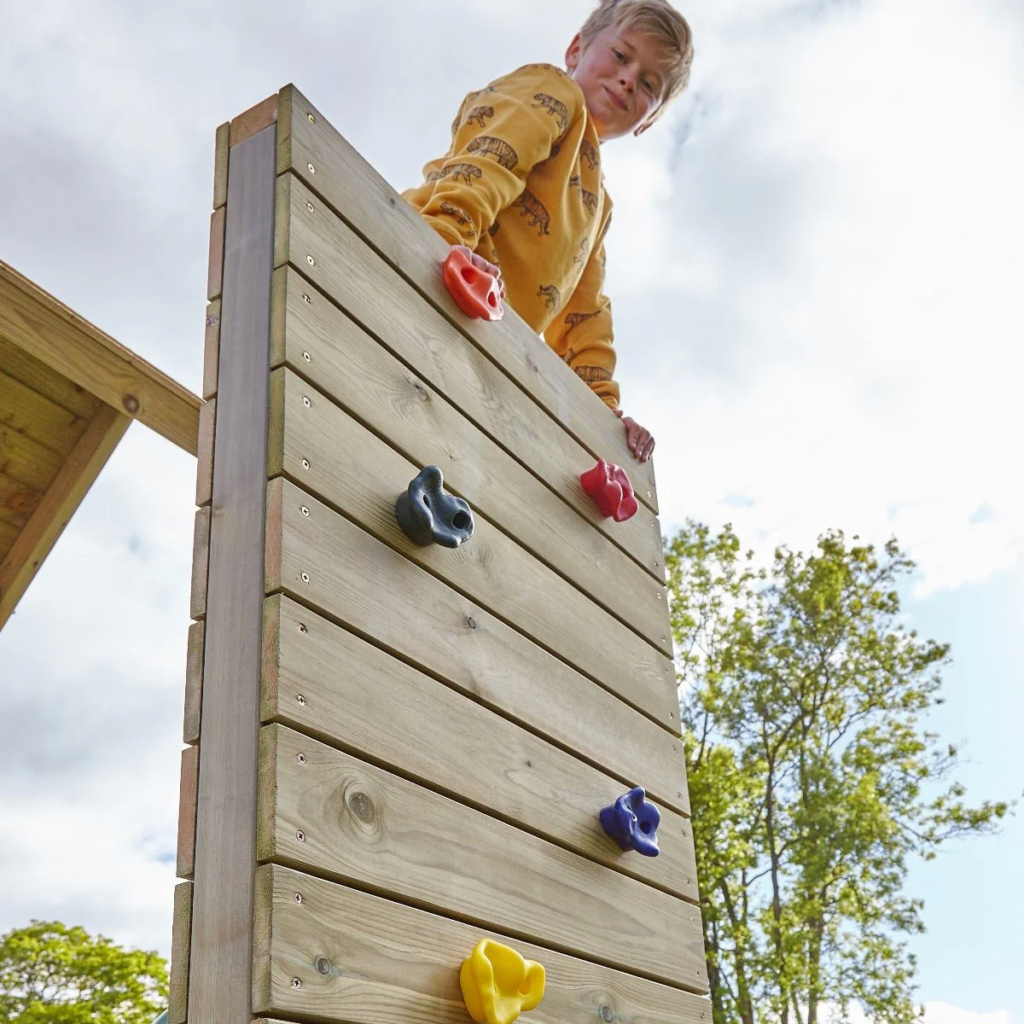
Image credit: Outdoor Toys / Rebo
6. Hang a Tire Swing
There’s something timeless about a tire swing spinning lazily from a sturdy branch. Unlike regular swings, tire swings can fit two kids at once (or one kid and a very patient dog), and the circular shape makes for wild, giggly spins. Old tires are free at most tire shops, though you’ll want to clean it thoroughly and maybe drill a few drainage holes so it doesn’t become a mosquito breeding ground.
Use heavy-duty rope or chain rated for much more weight than you think you need, and make sure the branch or beam you’re hanging from can handle the load. A swivel attachment lets the tire spin freely, which is half the fun. Position it away from the trunk and any other obstacles, and you’ve got a classic backyard feature that costs almost nothing but delivers endless joy.
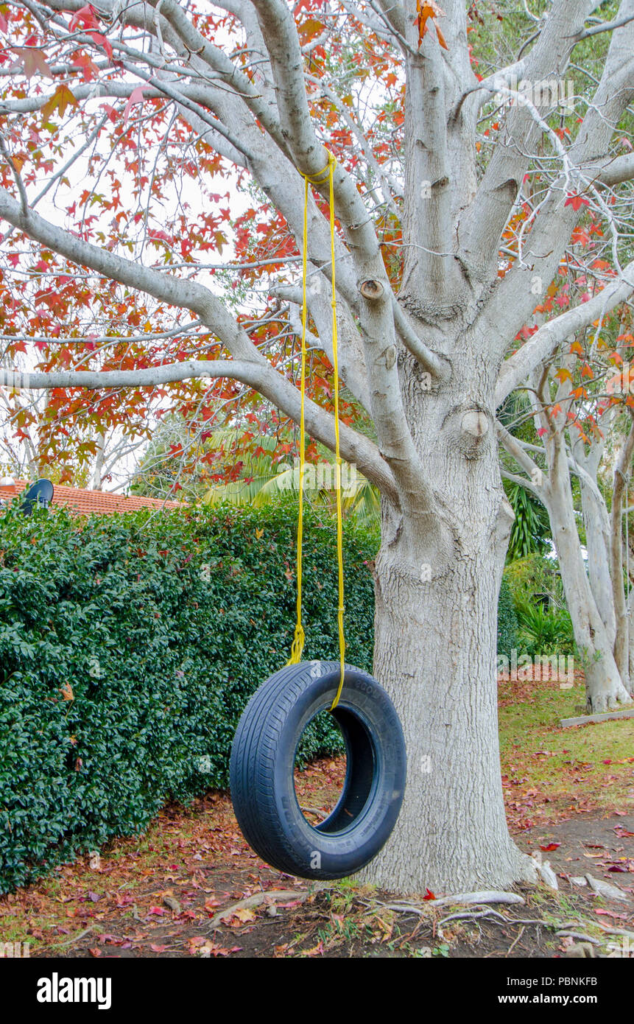
Image credit: iStock / Willowpix
7. Create an Outdoor Reading Nook
Not all play needs to be high-energy. A cozy outdoor reading nook gives kids a quiet place to flip through picture books, daydream, or just recharge between bursts of activity. A simple wooden structure with a bench, some weatherproof cushions, and a little roof for shade creates an instant hideaway that feels special and separate from the main yard.
Add a few plastic bins underneath for book storage, and let the kids decorate with potted plants or string lights. The best part? This is a space that grows with them—from toddler board books to chapter books read aloud on summer afternoons. It’s also the perfect spot for you to sneak in a coffee and a magazine while they play nearby.
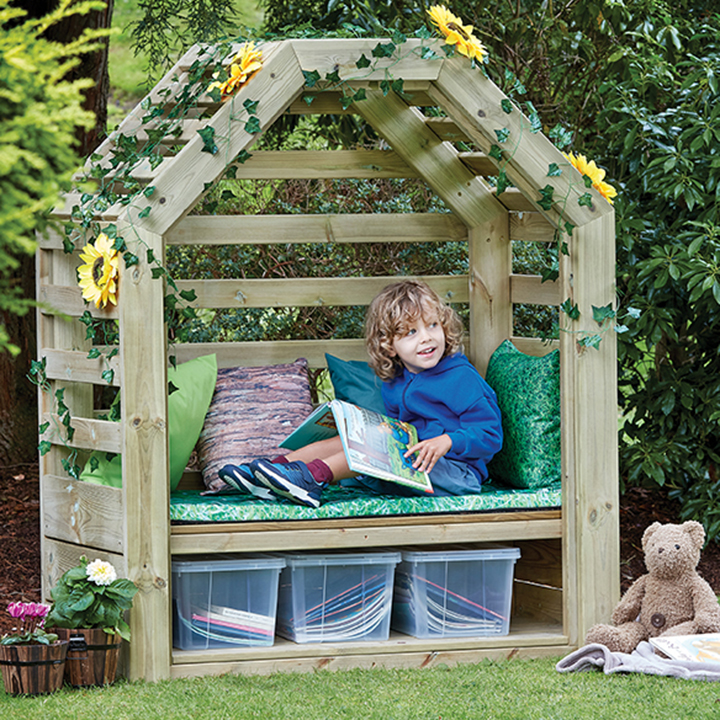
Image credit: Early Years Direct
8. Plant a Fairy Garden
Fairy gardens are magical little worlds that blend gardening with imaginative play. Start with a shallow container, an old wheelbarrow, or a dedicated corner of a flower bed, then add tiny houses, miniature furniture, pebble pathways, and small plants like moss, succulents, or creeping thyme. Kids can rearrange the pieces, create stories about the fairies who “live” there, and help with the watering and pruning.
The scale makes it perfect for small hands, and there’s no wrong way to design one. An acorn cap becomes a bowl, a twig becomes a bench, a shiny stone becomes a wishing well. It’s the kind of project that pulls kids outside quietly, and before you know it they’ve spent an hour arranging and rearranging their tiny kingdom while you get some peace.
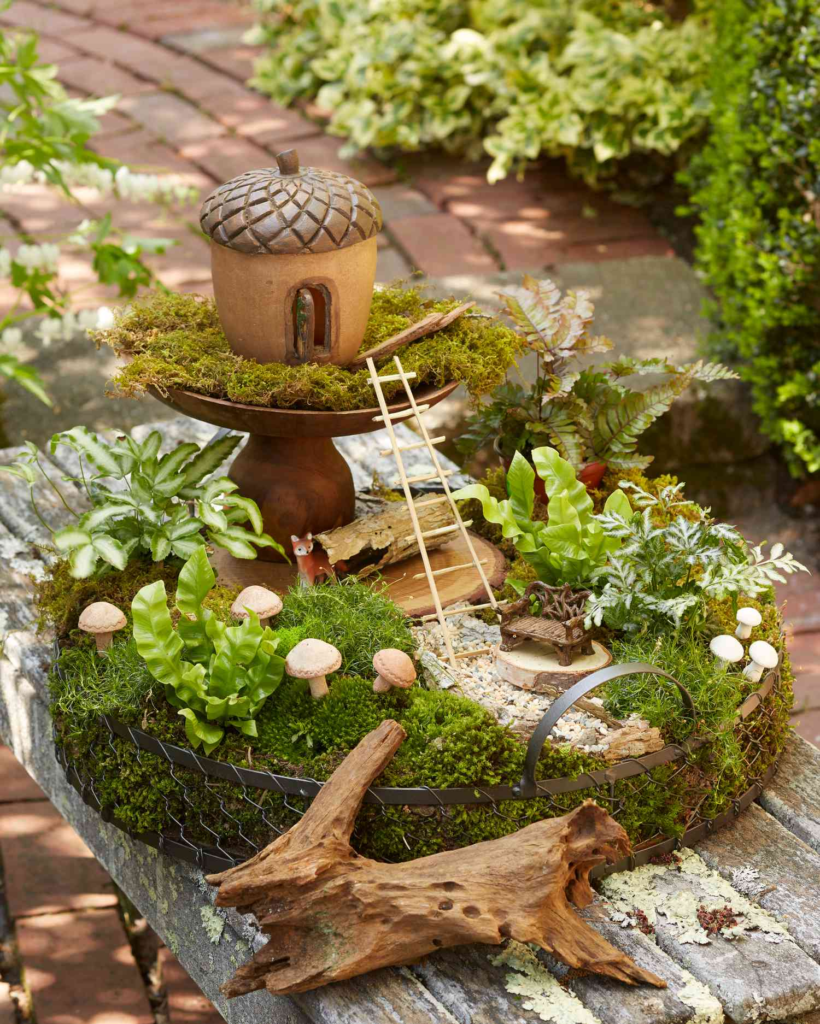
Image credit: The Spruce
9. Lay Down Stepping Stones
A simple path of stepping stones turns an ordinary lawn into an adventure course. Kids love the challenge of hopping from stone to stone without touching the “lava” (grass), and it naturally slows down their running so they’re not tearing across the yard at full speed all day. You can buy colorful plastic or rubber stones designed for balance play, or go the natural route with flat rocks or cut logs.
Arrange them in a winding path that leads to different play zones—the sandbox, the swing set, a secret corner. Space them at kid-friendly intervals, and if you’re using natural materials, make sure they’re stable and not wobbly. It’s a small touch that adds structure and whimsy to the yard without any major construction.
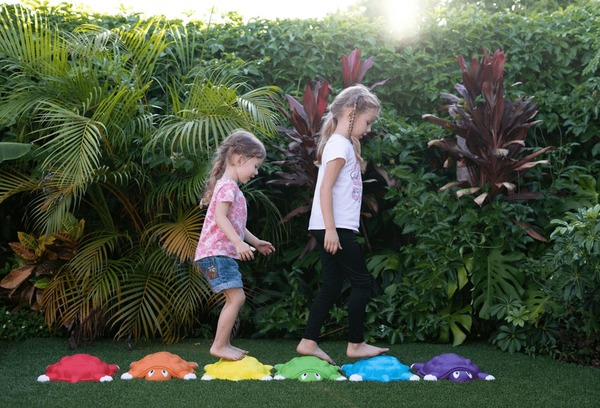
Image credit: Shutterstock
10. Set Up a Water Play Table
On hot summer days, a water play table is basically a peace treaty between kids and parents. These elevated basins let toddlers and preschoolers pour, splash, and experiment with water flow without the commitment (or water volume) of a kiddie pool. Many come with built-in toys like water wheels, funnels, and small buckets that keep little hands busy.
For a more natural look, you can build a simple wooden water table with a pump and channels that let kids move water from one basin to another. Position it on a patio or deck for easy cleanup, or let the grass get soaked—it’s just water, and it’ll dry. Keep a stack of old towels nearby and embrace the fact that everyone will end up at least a little bit damp.
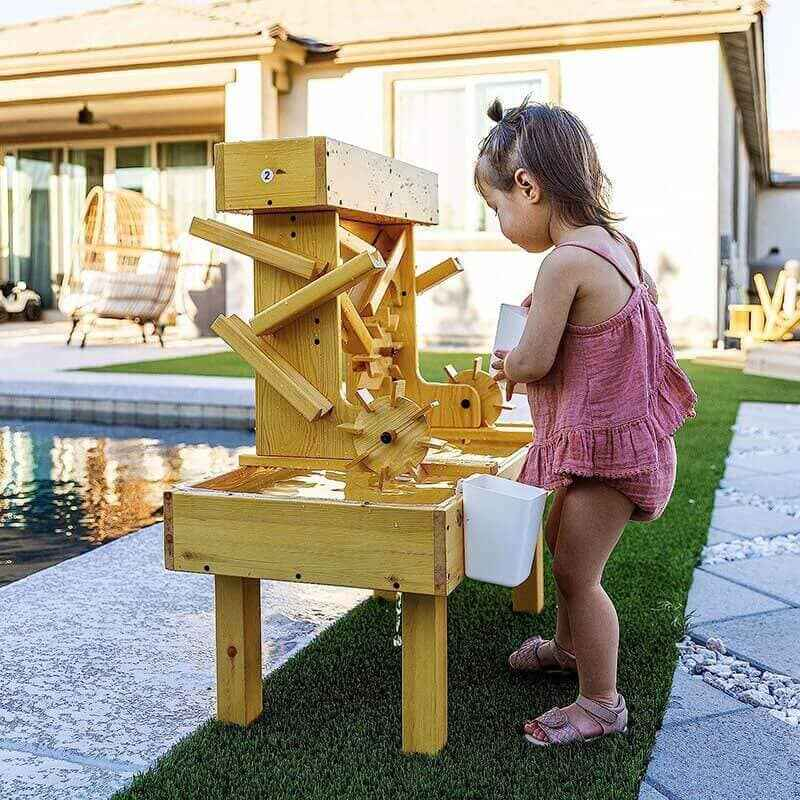
Image credit: Extreme Kids World
11. Build a Backyard Obstacle Course
Kids have endless energy, and an obstacle course gives them a constructive way to burn it. You don’t need ninja warrior-level equipment—simple elements like rope nets, balance beams, tunnels, and hopscotch grids made with sidewalk chalk create plenty of challenge. The key is variety: something to climb, something to balance on, something to crawl through, and something to jump over.
Change up the layout every few weeks to keep it interesting, and time them running through it if they’re competitive. A backyard obstacle course builds gross motor skills, coordination, and problem-solving as they figure out the best way through. Plus, it tires them out before dinner, which is honestly the whole point.
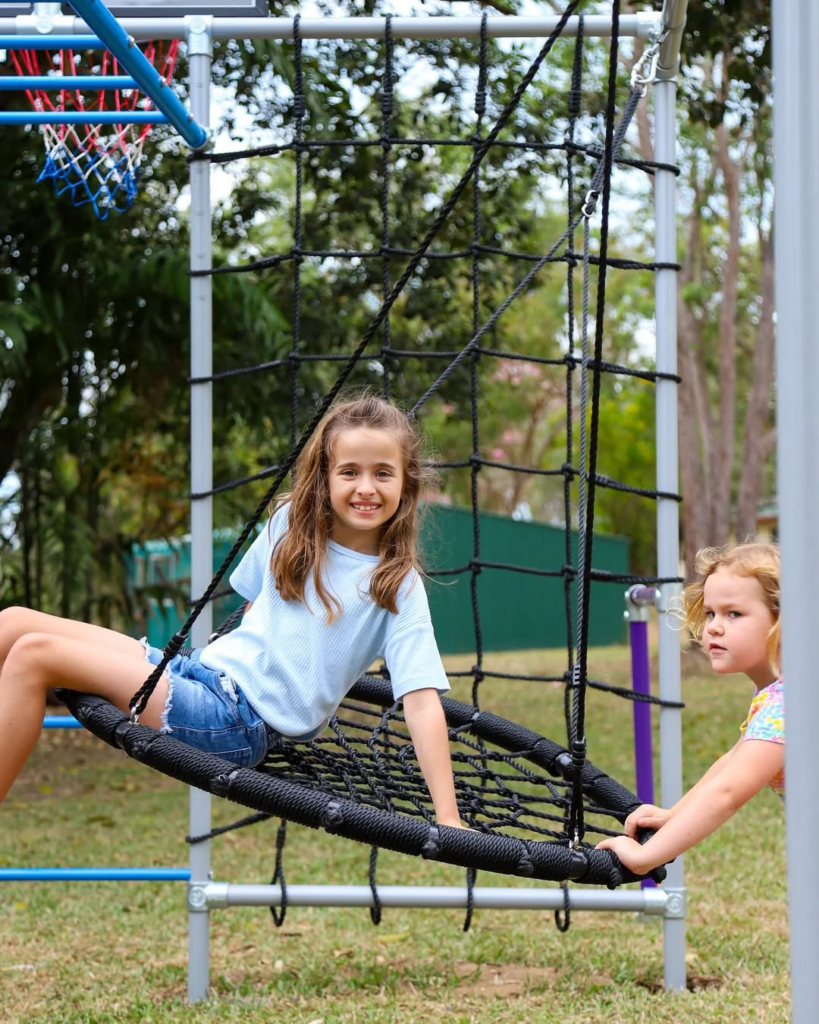
Image credit: Funky Monkey Bars
12. Install a Splash Pad
If you live somewhere hot and don’t want the hassle of a pool, a splash pad is the next best thing. These flat, sprinkler-equipped mats connect to your garden hose and shoot arcs of water upward, creating a mini water park in your yard. Kids run through the streams, sit on the sprays, and generally have the time of their lives while staying cool.
Most splash pads are made of durable PVC and roll up for storage when summer ends. They’re safer than pools for young kids since there’s no standing water depth to worry about, and they use way less water than running a sprinkler all afternoon. Set it up on level grass or a patio, turn on the hose, and let the shrieking and giggling commence.
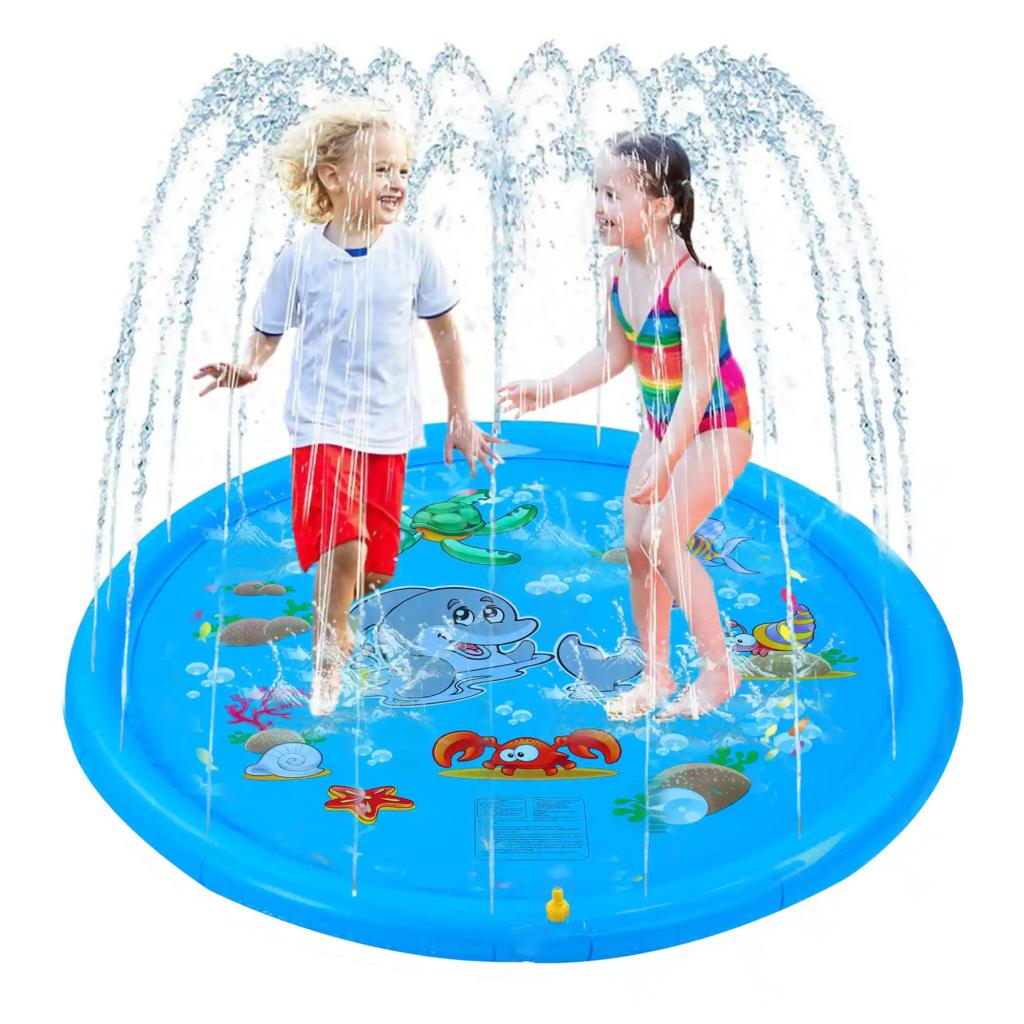
Image credit: Bed Bath & Beyond / Dimple
13. Add a Kid-Sized Picnic Table
Sometimes the best play is just sitting down with a snack, a craft, or a friend. A kid-sized picnic table gives them a dedicated outdoor spot for all of it—lunch on sunny days, finger painting sessions, Lego building, or lemonade stands. Wooden versions weather beautifully and can be repainted whenever the kids want a new color scheme.
Look for one with an umbrella hole so you can add shade on bright days, and make sure the benches aren’t too high for the smallest family members. It’s also the perfect surface for messy activities you’d rather not do inside, like slime-making, shell sorting, or that classic childhood favorite: eating watermelon and spitting seeds into the grass.
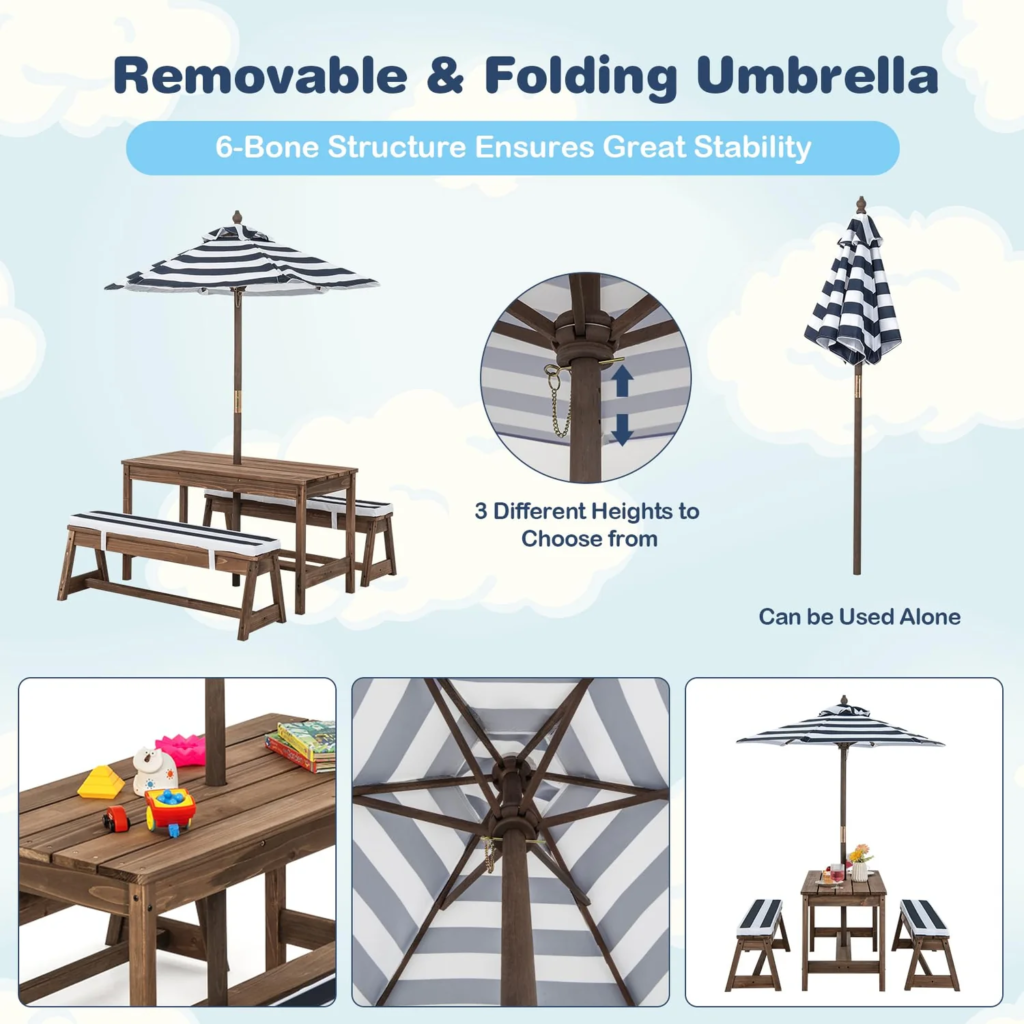
Image credit: Baby Joy Kids / Honey Joy
14. Set Up Outdoor Musical Instruments
Kids are naturally noisy—why not channel that energy into something musical? Outdoor instruments like xylophones, drums, chimes, and bells designed for backyard use let kids experiment with sound without driving you completely up the wall. The tones are usually pleasant, and there’s something joyful about hearing them bang out impromptu concerts while you weed the garden.
Wooden xylophones and metal chimes hold up well to weather, and you can mount them on fence posts or freestanding frames at kid height. Encourage them to “compose” songs for different occasions—birthdays, rainy days, Tuesday afternoons. It’s creative play that engages their brains and gives them a sense of accomplishment when they figure out a simple melody.
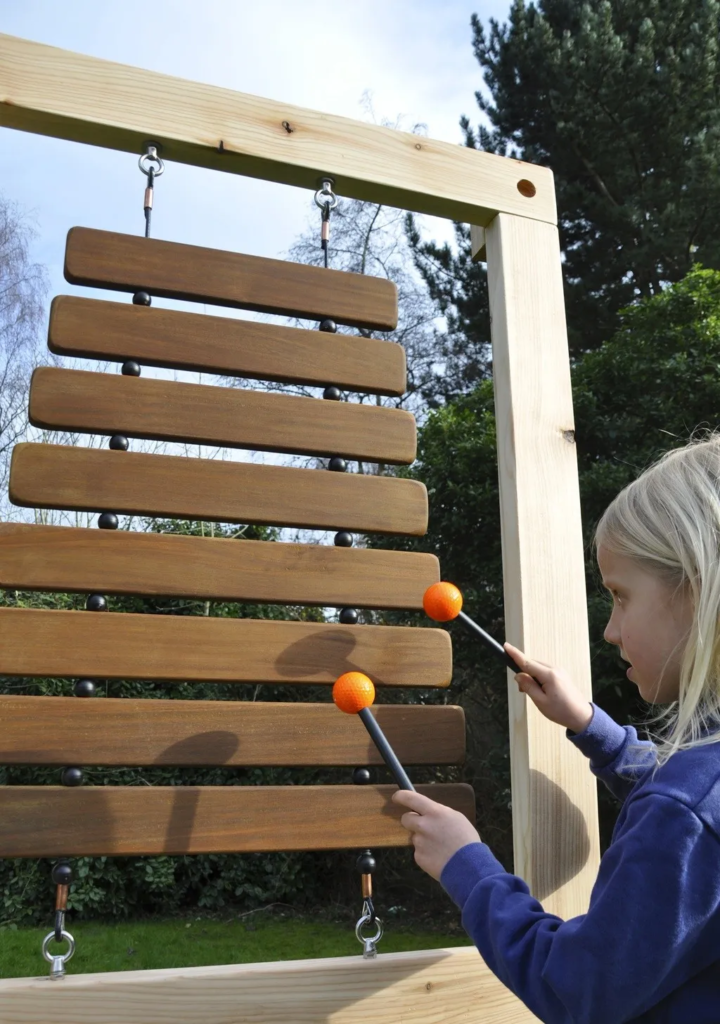
Image credit: ESI / Foundations
15. String Up a Zip Line
Okay, this one is admittedly a bit extra, but if you’ve got the space and the right slope, a backyard zip line is the stuff of childhood legend. It doesn’t need to be long—even a thirty-foot run between two trees gives kids that exhilarating feeling of flying. Commercial kits come with everything you need, including the cable, trolley, seat or handles, and braking system.
Safety is obviously the priority here: the cable needs to be rated for much more than your heaviest child, the start and end points need to be secure, and adult supervision is non-negotiable. But watching your kid’s face as they take that first glide across the yard? Pure, unfiltered joy. Just be prepared to become the most popular house on the block once word gets out.
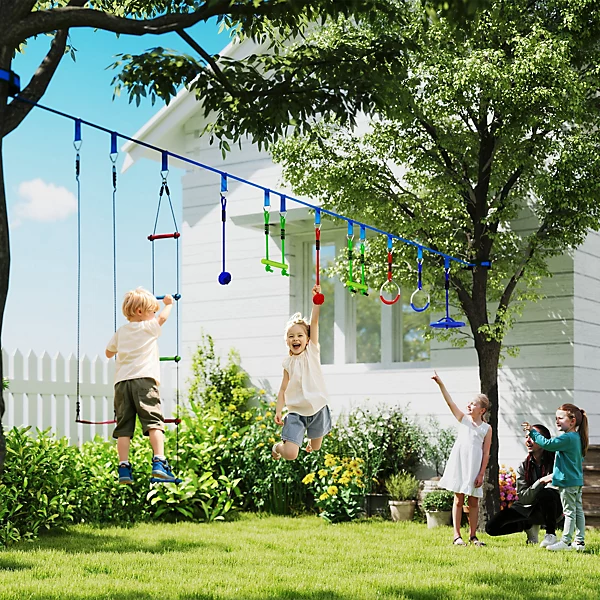
Image credit: DIY.com / AIYAPLAY
One Last Thought: You don’t need to build all fifteen of these to create an amazing backyard play space. Pick two or three that fit your yard, your budget, and your kids’ ages, then let those evolve naturally over time. The best play areas grow with your family, collecting scuff marks, grass stains, and memories along the way. Now get outside and play!