You’ve probably seen the word “brutalism” thrown around in design circles lately, and if you’re anything like me, your first thought was probably something along the lines of: that sounds cold, harsh, and maybe a little bit scary. I get it. The name itself doesn’t exactly scream “curl up with a good book and a cup of tea.” But here’s the thing—soft brutalism is having a major moment right now, and it’s actually one of the most livable, welcoming design styles I’ve come across in years.
Think of it as the design equivalent of that friend who seems intimidating at first but turns out to be the biggest softie you know. Soft brutalism takes all the raw, honest materials that made traditional brutalism famous—concrete, stone, exposed brick, untreated wood—and pairs them with warm textures, curved shapes, and a palette so soothing it could put you to sleep (in the best way possible). The result? Spaces that feel grounded and substantial, yet somehow incredibly gentle at the same time. It’s architecture with a hug, basically.
The Living Room: Where Concrete Meets Comfort
The living room is really where soft brutalism gets to show off what it’s all about. Picture this: walls left in their natural concrete state, maybe with the faint lines of timber formwork still visible, creating this gorgeous textured backdrop that changes personality throughout the day as the light shifts across it. Instead of fighting the industrial feel, you lean into it—but then you add a plush bouclé sofa that practically begs you to sink into it, a chunky knit throw draped casually over the arm, and a coffee table with enough heft to feel sculptural without being pretentious.
What I love most about soft brutalist living rooms is that they don’t try too hard. There’s no need for elaborate gallery walls or fussy arrangements. A single oversized piece of abstract art, maybe something with organic shapes in muted earth tones, does all the heavy lifting. And the lighting? Skip the crystal chandeliers and go for something with substance—think hand-blown glass pendants or linear LED strips that graze the concrete surfaces and make the textures come alive after dark. The whole vibe says “I’ve got my life together” without saying “I spent three hours styling this room for a photo shoot.”
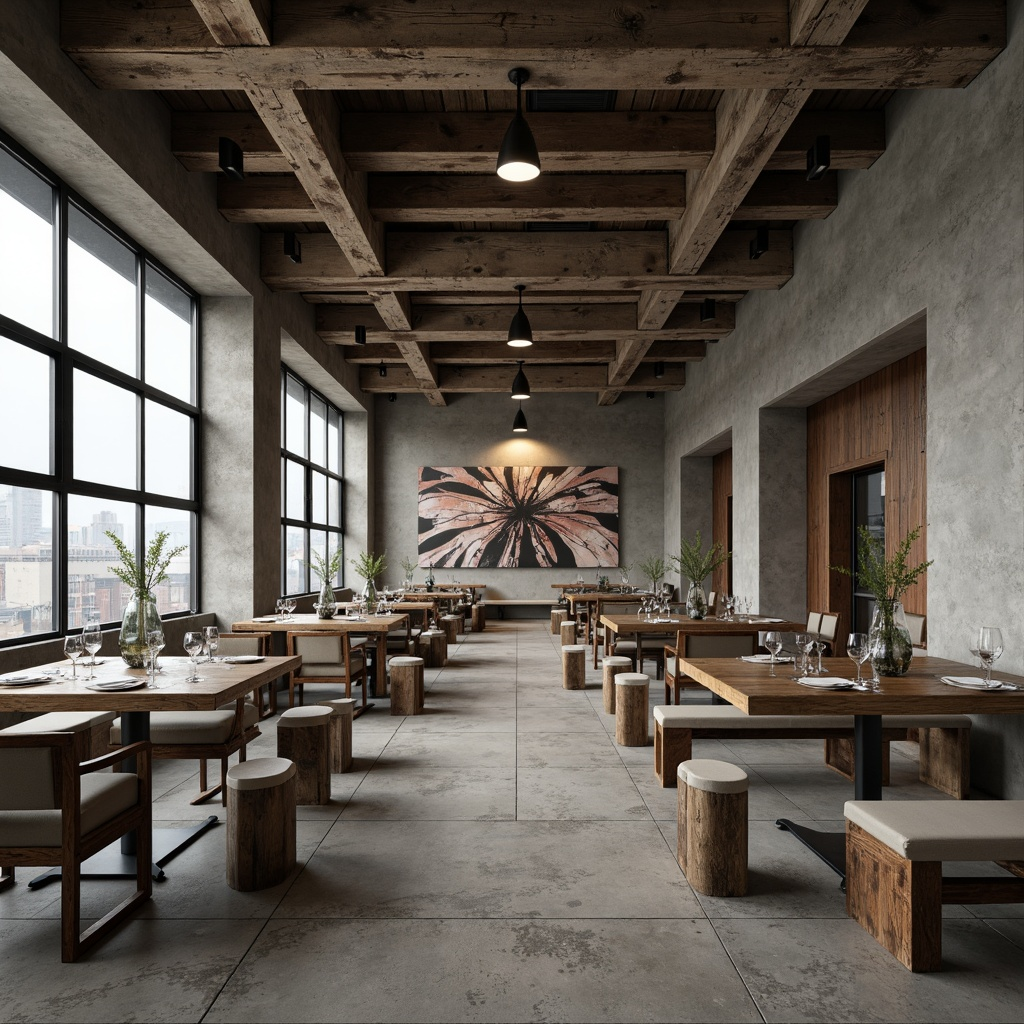
Image credit: Homeg.org / Modern Brutalist Interior Design Ideas
The Kitchen: Heart of Stone (But Make It Warm)
Kitchens in soft brutalist homes are where the magic really happens, because this is a space that has to work hard while still looking beautiful. The classic move is a massive concrete island—I’m talking serious monolith energy here—with edges that might be slightly rounded to take the severity down a notch. Pair that with light oak cabinetry that shows off the wood grain, and suddenly the whole room feels like a warm handshake instead of a cold shoulder.
Open shelving is practically a requirement in this style, but not the kind where you stress about everything matching perfectly. Stack your everyday plates and bowls where everyone can see them—handmade ceramics in sand and stone colors work beautifully. Add a few well-worn cookbooks, a wooden cutting board with actual knife marks on it (because you actually cook!), and maybe a single sculptural vase with some dried grasses. The goal is to look like you’ve lived a little, you know? Skip the shiny subway tiles and go for something with more soul—micro cement backsplashes, limewash finishes, or even just leaving the brick exposed if you’re lucky enough to have it hiding behind there.
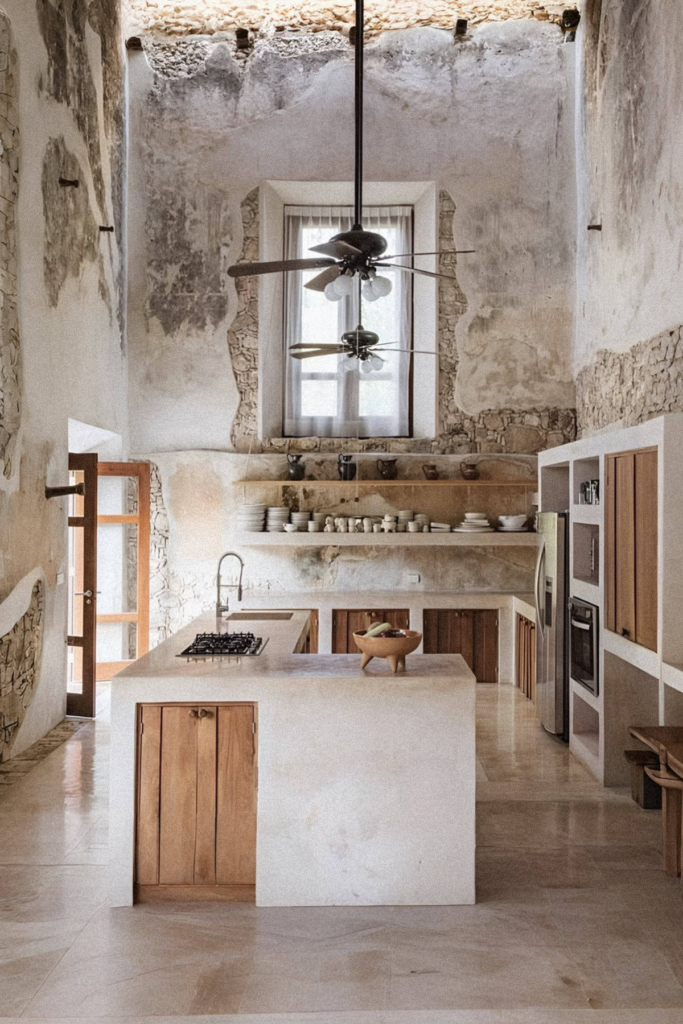
Image credit: The Shelfist / My Soft Spot For The Brutalist Kitchen
The Dining Room: Gathering Around Honest Materials
Dining rooms in the soft brutalist world are all about creating a space where people actually want to linger after the meal is over. The table is the star of the show here, and it needs to have presence—think thick reclaimed wood with visible knots and cracks, or a poured concrete top with a live edge that reminds you this material came from somewhere real. Pair it with chairs that have some sculptural interest but don’t sacrifice comfort; molded plywood, warm leather, or even a mix of different styles if you’re feeling adventurous.
What makes these dining spaces feel so special is the way they balance the rough with the refined. A raw concrete ceiling might sound like too much, but when it’s paired with a handwoven rug underfoot and pendant lights that cast a warm, golden glow across the table, suddenly it all clicks into place. I always tell people to add something living—whether that’s a simple branch in a heavy ceramic vase or a trailing pothos on a nearby shelf. It breaks up all the hard surfaces and reminds everyone that this is a home, not a museum. And honestly? The best soft brutalist dining rooms are the ones where you can still see a coffee ring or two on the table from Sunday morning pancakes.
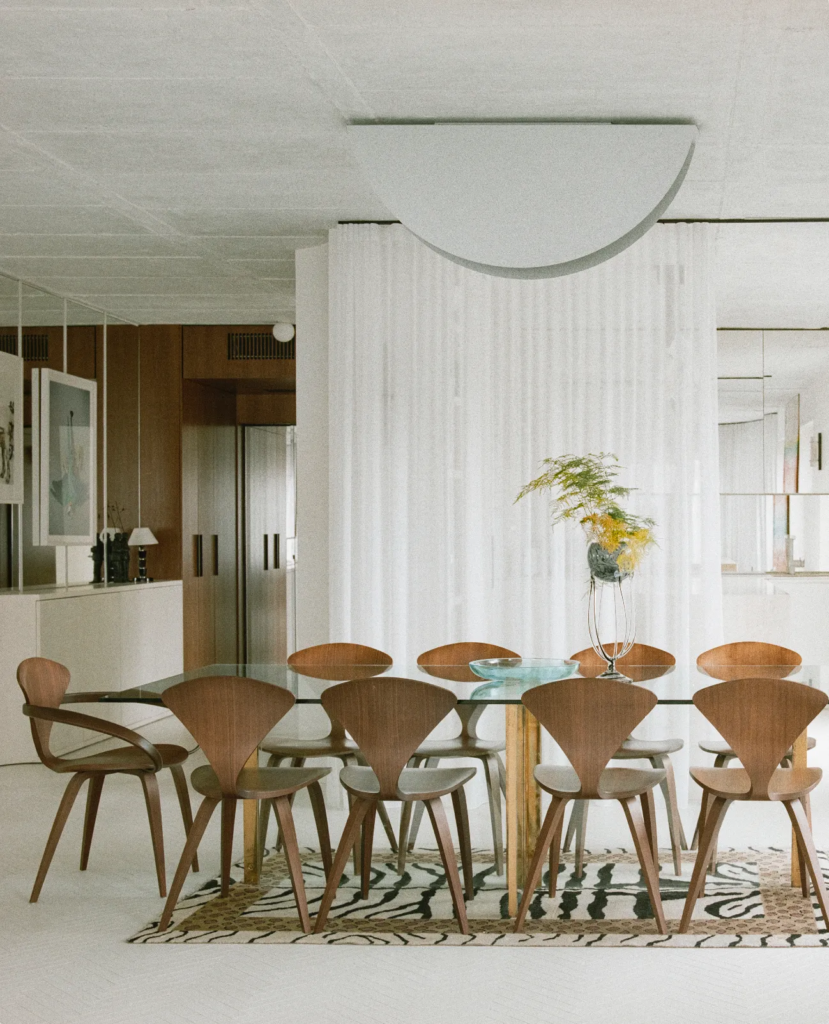
Image credit: Architectural Digest / This Minimalist Apartment in Paris Showcases Soft Brutalism
The Bedroom: A Sanctuary of Calm
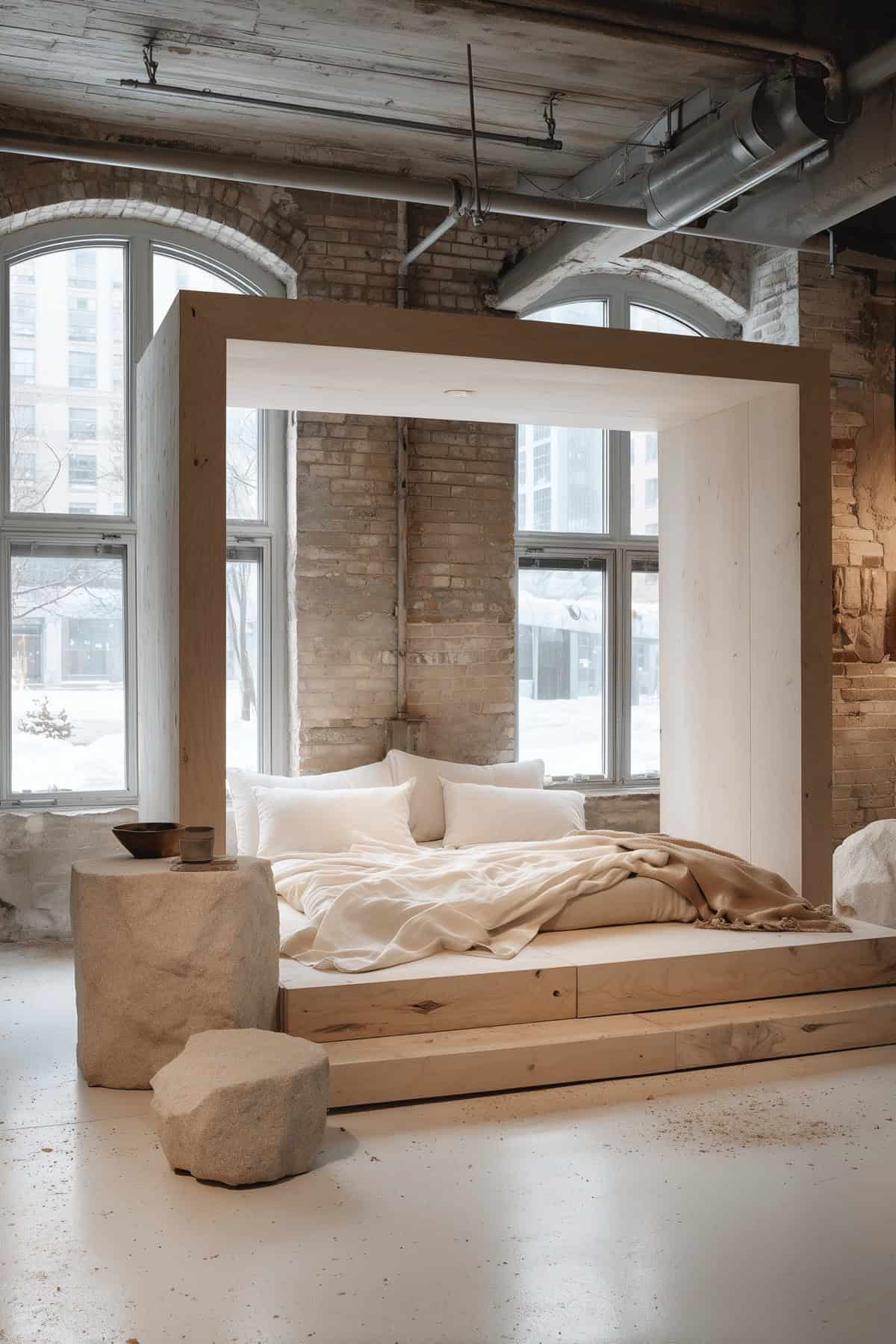
If there’s one room where soft brutalism truly shines, it’s the bedroom—because this is a space that demands both visual quiet and physical comfort. The approach here is all about layering textures against a backdrop of raw, honest materials. Exposed brick walls painted in warm whites, or concrete left in its natural state but softened by the glow of bedside lamps with linen shades. The bed itself should feel like a cloud you can’t wait to fall into: think organic cotton sheets in undyed naturals, a chunky wool blanket at the foot, and enough pillows to build a small fort.
What I find so appealing about soft brutalist bedrooms is how they strip away all the unnecessary noise. No matching furniture sets, no overly coordinated color schemes. Instead, you might have a platform bed made from reclaimed timber, a single stone stool serving as a nightstand, and a vintage rug with faded patterns that tell a story. The lighting should feel intimate—wall-mounted sconces that free up surface space, or a pendant with a warm bulb that creates pools of soft light rather than flooding the whole room. And please, leave some windows bare if you can. There’s something incredibly peaceful about waking up to morning light hitting a concrete wall—it makes you feel connected to the day in a way that heavy curtains just can’t replicate.
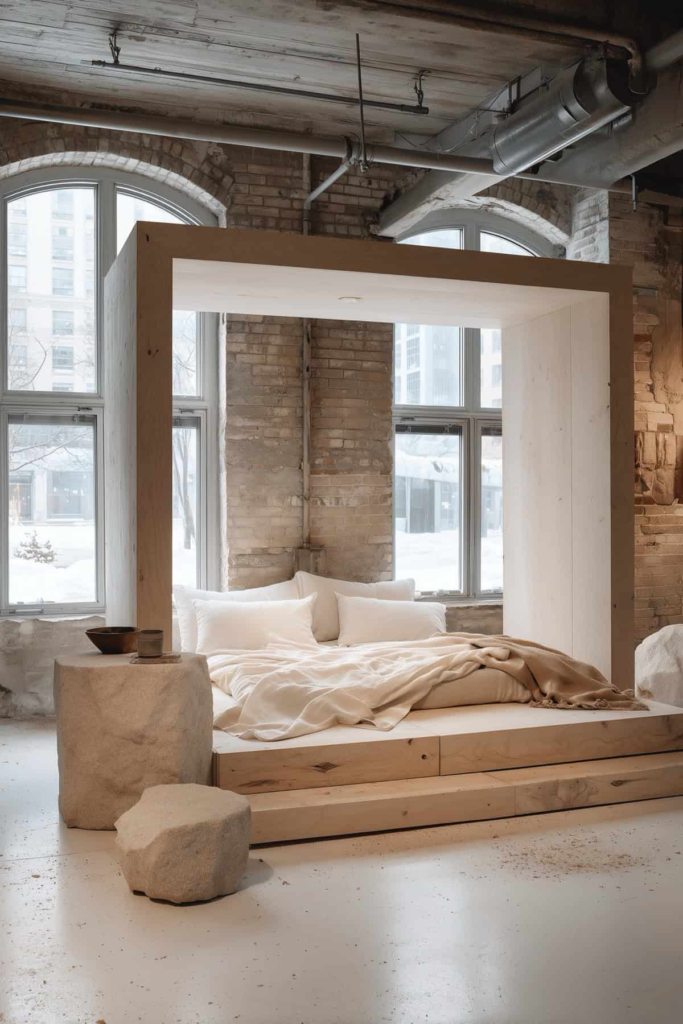
Image credit: The Shelfist / How To Style A Brutalist Bedroom
The Bathroom: Your Daily Dose of Spa-Like Serenity
Bathrooms in soft brutalist homes are where the whole “rough yet relaxing” philosophy really proves itself. Forget the glossy all-white spa aesthetic you’ve seen a million times—this is about creating a space that feels ancient and modern at the same time. Concrete sinks carved from single blocks, walls finished in waterproof tadelakt plaster that feels like velvet under your fingertips, and fixtures in warm metals like aged brass or copper that develop a natural patina over time.
The key to making it work is in the details. A freestanding stone tub positioned to catch natural light from a skylight. Open copper piping that turns the plumbing into a design feature rather than hiding it away. Wooden bath trays holding your actual favorite products, not the matching set you bought for the aesthetic. And towels—thick, textured, in shades of oatmeal and charcoal—hung on simple black metal bars that feel industrial without being cold. My favorite trick? Add a small stool or bench made from reclaimed wood. It gives you somewhere to sit while you dry off, sure, but it also brings that essential warmth that keeps the whole space from feeling like a concrete bunker. Because nobody wants to feel like they’re showering in a parking garage, no matter how design-forward they are.
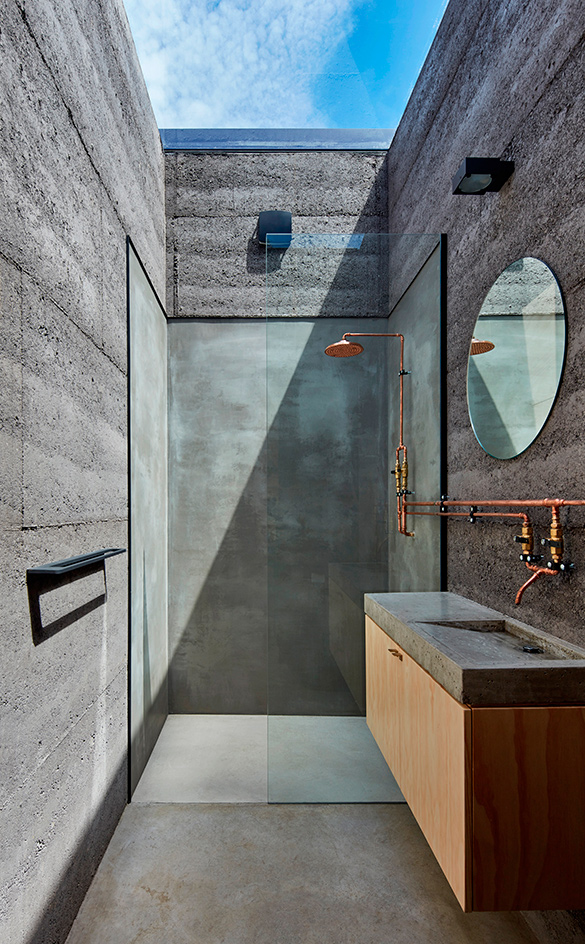
Image credit: Wallpaper / 11 Brutalist Bathrooms That Bare All*
The Entryway: Setting the Tone From the First Step
Your entryway is the handshake of your home—the first impression that tells people what they’re about to experience. In a soft brutalist space, this means embracing the drama a little bit. A long corridor with raw concrete walls that draw the eye forward, maybe toward a tall window at the far end that floods the space with natural light. The floor might be polished concrete or wide-plank oak, something that can handle muddy boots and wet umbrellas without looking like it’s having a crisis.
But here’s where the “soft” part comes in: add a built-in bench with a leather cushion that gets better and more comfortable with age. A single oversized plant in a heavy ceramic pot—fiddle leaf figs work great if you’ve got the light, or a sculptural snake plant if you’re more of a “set it and forget it” person. Maybe a simple woven runner that adds texture underfoot and helps absorb some of the sound in what can otherwise be an echoey space. And lighting—please don’t just stick a flush-mount ceiling fixture here and call it a day. A sculptural pendant, maybe something in folded paper or perforated metal, creates a focal point that makes the whole arrival experience feel intentional. The message you want to send is: yes, this home is serious about design, but it’s also serious about making you feel welcome.
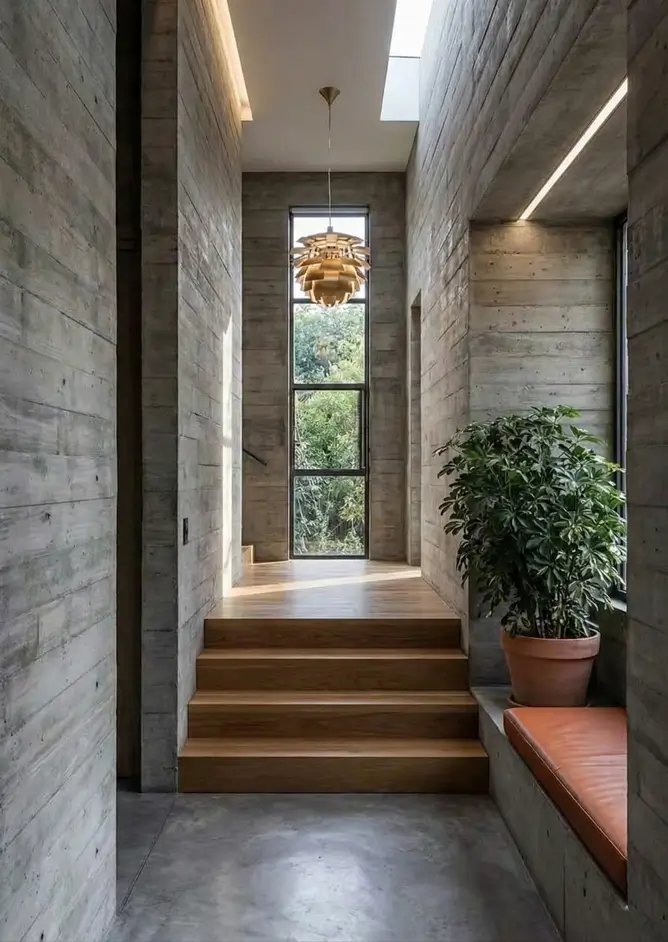
Image credit: Homeg.org / Modern Brutalist Interior Design Ideas
Bringing It All Together
At the end of the day, soft brutalism isn’t about achieving some perfect magazine-ready aesthetic. It’s about creating spaces that feel honest, grounded, and genuinely comfortable to live in. The concrete isn’t trying to be marble. The wood isn’t trying to be perfectly uniform. The textiles aren’t trying to look untouched. Everything is allowed to be exactly what it is, and there’s something incredibly freeing about that approach to design.
If you’re thinking about dipping your toes into this style, my advice is to start small. Maybe it’s just swapping out a coffee table for something with more substance, or leaving a wall unpainted to see how the texture grows on you. Add one warm element for every cool one, and trust your gut on what feels right. The best soft brutalist homes are the ones that evolve over time, collecting marks and memories and becoming more beautiful because of them—not in spite of them. After all, the most interesting spaces are always the ones that tell a story about the people who actually live there.